
Click here to view past issues
IN THIS ISSUE
- WHA in Washington DC to talk 340B, MDH/LVH and Medicaid Funding
- 2026 Quarter 3 Quality Snapshot Highlights Wisconsin's National Leadership in Patient Experience
- Annual Hospital Board of Directors’ Educational Event to Be Held Nov. 17 in Madison
- Register Today for the Last Two Webinars in the Workforce Webinar Series
- Understanding Values, Navigating Ethical Issues and Incorporating the Inclusion and AI Imperatives in Health Care
- WHA Foundation Announces Winners of the 2026 Global Vision Community Partnership Award
EDUCATION EVENTS
Oct. 26, 2026
Surgical and Anesthesia Service Conditions of ParticipationOct. 29, 2026
WIpop Virtual Training: Session 3Nov. 12, 2026
WHA 2026 Wisconsin Health Care Workforce Webinar Series - Part 4: Beyond Contract Labor - Modern Blueprint for a Flexible, Sustainable WorkforceClick here to view education event calendar
View more issues of The Valued Voice
Sign Up for WHA's Newsletter


WHA in Washington DC to talk 340B, MDH/LVH and Medicaid Funding
On Sept. 24, the Wisconsin Hospital Association (WHA) met with Wisconsin's Congressional Delegation on Capitol Hill to advocate for top federal concerns for Wisconsin hospitals. Among the issues covered were concerns about the 340B prescription Drug Discount Program, reauthorizing funding for Medicare-Dependent and Low-Volume Hospitals, and concerns over CMS's plan to wind down federal Medicaid funding for state directed payments beginning in 2028.
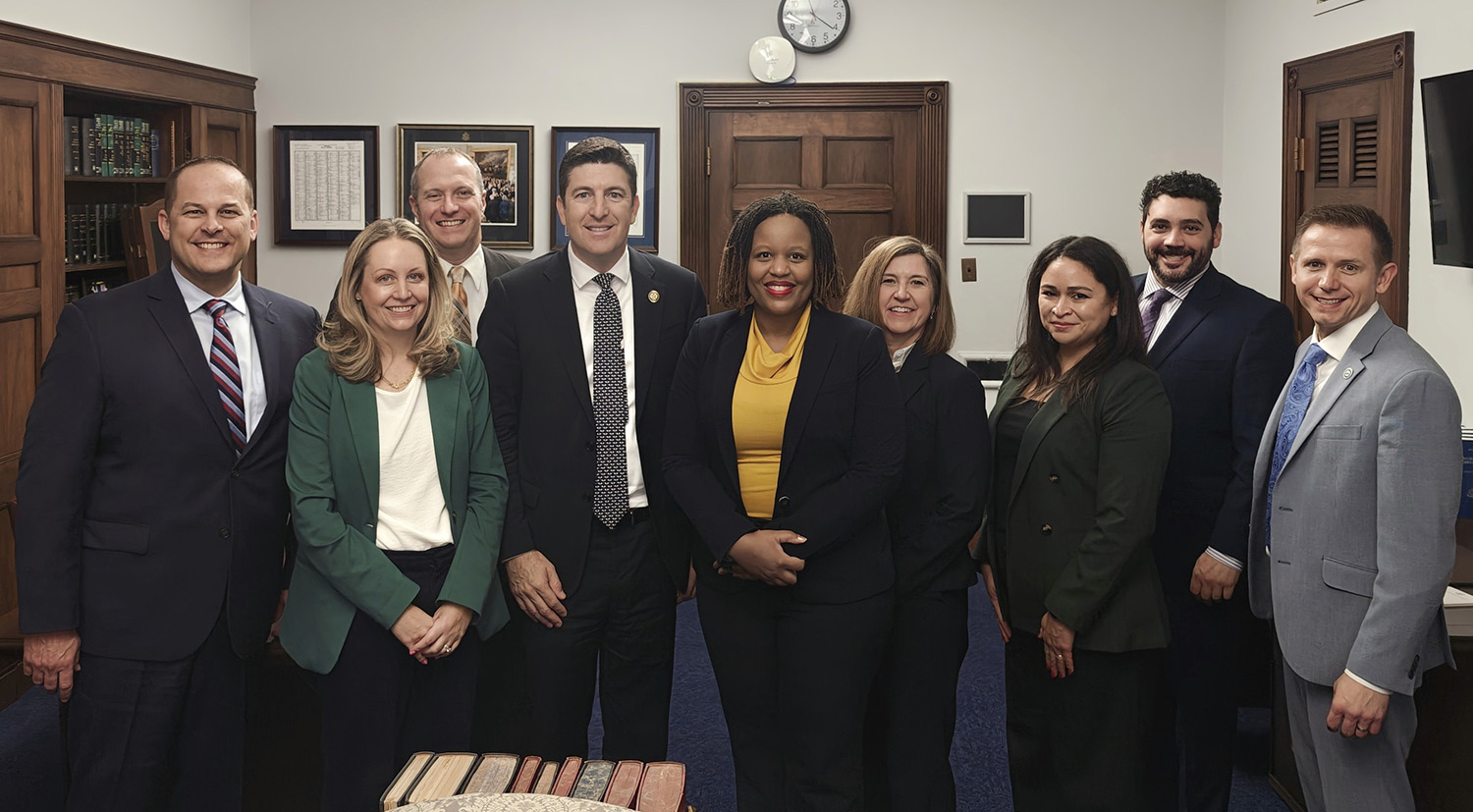 WHA and hospital leaders with U.S. Rep. Bryan Steil
Joining WHA Vice President of Federal Affairs & Advocacy Jon Hoelter were Reedsburg Area Medical Center President & CEO Bob Van Meeteren, Rural Wisconsin Health Cooperative Director of Advocacy Jeremy Levin, Emplify Health System Senior Consultant Carina Marquez-Oberhoffner, Aurora Health Care Director of Federal Affairs Meagan Thompson, Froedtert ThedaCare Health Vice President of Governance and Government Relations Maureen McNally, Children’s Wisconsin Vice President of Government Relations Lindsay Punzenberger, and Venn Strategies Senior Vice President Matt Scott (representing UW Health).
WHA sent a letter to members of Wisconsin's Congressional Delegation on Sept. 23 to alert them to concerns about a proposal by the Centers for Medicare and Medicaid Services (CMS) to implement the One Big Beautiful Bill Act’s (OBBBA) required wind-down of state-directed Medicaid payments faster than Congress intended. While the OBBBA required state payments be reduced 10% annually, beginning in 2028, CMS has proposed taking a 10% cut of a state's overall directed payments in the 2028 baseline year and applying that same amount each year, rather than a 10% reduction each year based off each year's new amount. WHA estimates this would reduce federal Medicaid funding for Wisconsin hospitals by $897 million, as payments would decrease to the statutory limit of 110% of Medicare in 8 years instead of the 11 years it would take under an alternative model CMS considered. That alternative model would recalculate the 10% amount each year, consistent with the statute passed by Congress and signed by President Trump.
WHA urged members of Wisconsin's Congressional delegation to contact CMS as well as the House Committee on Energy & Commerce and Senate Committee on Finance to express their concerns and urge them to provide states the maximum flexibility to implement the scheduled reduction in a manner that is consistent with federal statute.
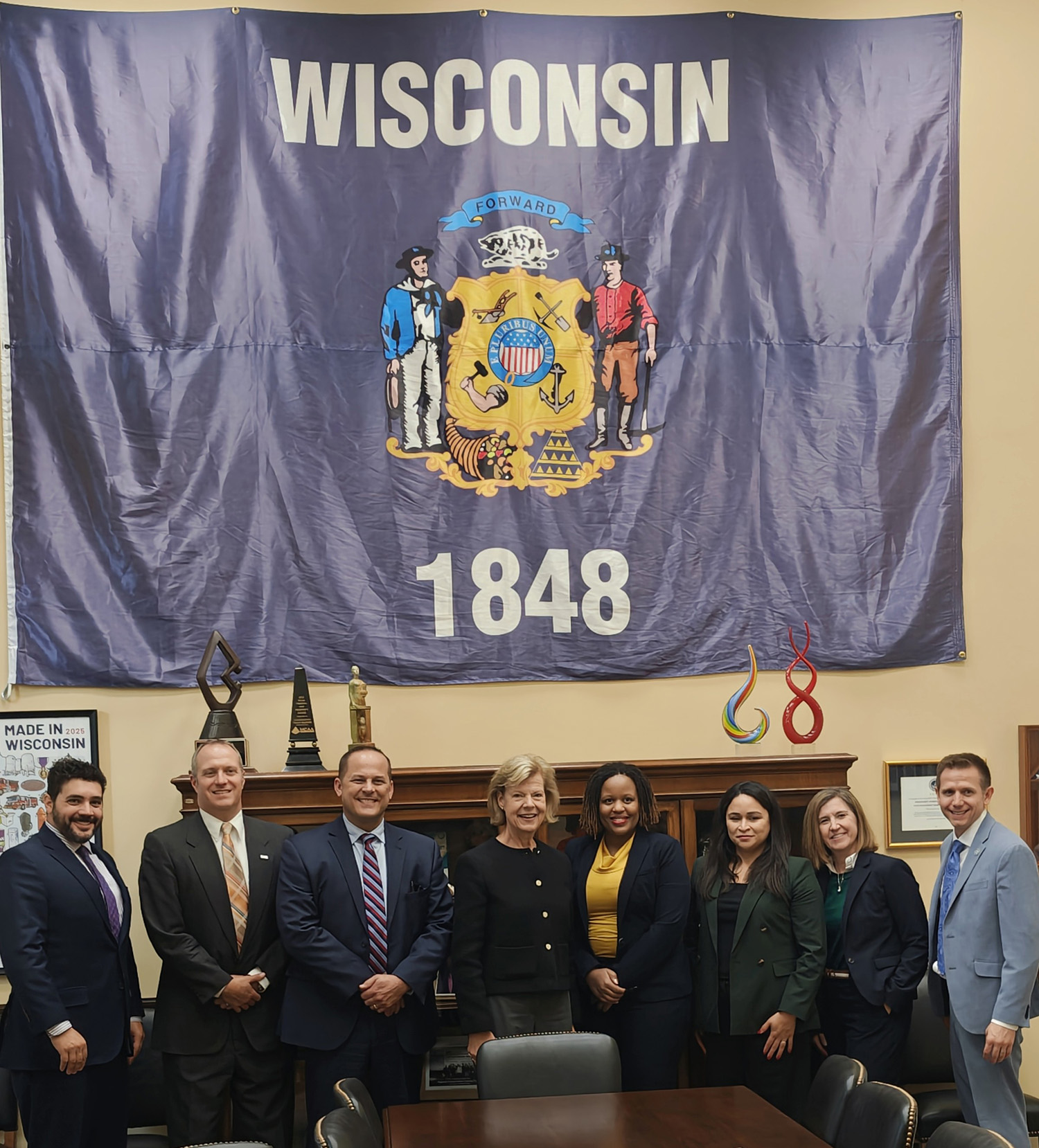 WHA and hospital leaders with U.S Sen. Tammy BaldwinWith the Medicare-Dependent (MDH) and Low-Volume Hospital (LVH) programs slated to expire at the end of 2028, WHA's hospital leaders also reminded lawmakers of the importance of reauthorizing these important programs which help hospitals with lower volumes of commercially insured patients to stay afloat by paying them slightly higher Medicare rates than typical hospitals that are paid under the prospective payment system. Wisconsin has about 16 MDH or LVH hospitals that would lose about $230 million over 10 years if these programs ended.
Finally, the group of hospital leaders alerted members of Wisconsin's Congressional Delegation to the persistent attacks to the 340B prescription drug discount program that hospitals are experiencing, including:
- Continued denial of 340B discounts at contract pharmacies.
- New demands for 340B claims-level data.
- A new rebate model pilot beginning in 2028 that could turn 340B into a form of prior authorization.
- Pharmacy benefit manager discriminatory reimbursement policies and practices that are fraudulently diverting over 50% of 340B discounts away from providers to large for-profit conglomerates.
- $138 million in annual Medicare 340B reimbursement cuts to WI hospitals starting in 2028.
WHA members praised Senator Baldwin and the other bipartisan members of the Senate "Gang of 6" that formally introduced the Sustain 340B act back in August, which attempts to correct a number of these policies that undermine the intent of the 340B program. WHA also urged House lawmakers to take up the positive reforms included in this legislation.
WHA is continuing to advocate for these priorities and intends to be back in Washington, DC after the November elections to remind lawmakers of the importance of acting on these and other health care priorities. Anyone interested in joining WHA for this or another upcoming trip to Capitol Hill may contact WHA’s VP of Federal Affairs and Advocacy, Jon Hoelter.
WHA in Washington DC to talk 340B, MDH/LVH and Medicaid Funding
On Sept. 24, the Wisconsin Hospital Association (WHA) met with Wisconsin's Congressional Delegation on Capitol Hill to advocate for top federal concerns for Wisconsin hospitals. Among the issues covered were concerns about the 340B prescription Drug Discount Program, reauthorizing funding for Medicare-Dependent and Low-Volume Hospitals, and concerns over CMS's plan to wind down federal Medicaid funding for state directed payments beginning in 2028.
WHA and hospital leaders with U.S. Rep. Bryan Steil
Joining WHA Vice President of Federal Affairs & Advocacy Jon Hoelter were Reedsburg Area Medical Center President & CEO Bob Van Meeteren, Rural Wisconsin Health Cooperative Director of Advocacy Jeremy Levin, Emplify Health System Senior Consultant Carina Marquez-Oberhoffner, Aurora Health Care Director of Federal Affairs Meagan Thompson, Froedtert ThedaCare Health Vice President of Governance and Government Relations Maureen McNally, Children’s Wisconsin Vice President of Government Relations Lindsay Punzenberger, and Venn Strategies Senior Vice President Matt Scott (representing UW Health).
WHA sent a letter to members of Wisconsin's Congressional Delegation on Sept. 23 to alert them to concerns about a proposal by the Centers for Medicare and Medicaid Services (CMS) to implement the One Big Beautiful Bill Act’s (OBBBA) required wind-down of state-directed Medicaid payments faster than Congress intended. While the OBBBA required state payments be reduced 10% annually, beginning in 2028, CMS has proposed taking a 10% cut of a state's overall directed payments in the 2028 baseline year and applying that same amount each year, rather than a 10% reduction each year based off each year's new amount. WHA estimates this would reduce federal Medicaid funding for Wisconsin hospitals by $897 million, as payments would decrease to the statutory limit of 110% of Medicare in 8 years instead of the 11 years it would take under an alternative model CMS considered. That alternative model would recalculate the 10% amount each year, consistent with the statute passed by Congress and signed by President Trump.
WHA urged members of Wisconsin's Congressional delegation to contact CMS as well as the House Committee on Energy & Commerce and Senate Committee on Finance to express their concerns and urge them to provide states the maximum flexibility to implement the scheduled reduction in a manner that is consistent with federal statute.
WHA and hospital leaders with U.S Sen. Tammy BaldwinWith the Medicare-Dependent (MDH) and Low-Volume Hospital (LVH) programs slated to expire at the end of 2028, WHA's hospital leaders also reminded lawmakers of the importance of reauthorizing these important programs which help hospitals with lower volumes of commercially insured patients to stay afloat by paying them slightly higher Medicare rates than typical hospitals that are paid under the prospective payment system. Wisconsin has about 16 MDH or LVH hospitals that would lose about $230 million over 10 years if these programs ended.
Finally, the group of hospital leaders alerted members of Wisconsin's Congressional Delegation to the persistent attacks to the 340B prescription drug discount program that hospitals are experiencing, including:
- Continued denial of 340B discounts at contract pharmacies.
- New demands for 340B claims-level data.
- A new rebate model pilot beginning in 2028 that could turn 340B into a form of prior authorization.
- Pharmacy benefit manager discriminatory reimbursement policies and practices that are fraudulently diverting over 50% of 340B discounts away from providers to large for-profit conglomerates.
- $138 million in annual Medicare 340B reimbursement cuts to WI hospitals starting in 2028.
WHA members praised Senator Baldwin and the other bipartisan members of the Senate "Gang of 6" that formally introduced the Sustain 340B act back in August, which attempts to correct a number of these policies that undermine the intent of the 340B program. WHA also urged House lawmakers to take up the positive reforms included in this legislation.
WHA is continuing to advocate for these priorities and intends to be back in Washington, DC after the November elections to remind lawmakers of the importance of acting on these and other health care priorities. Anyone interested in joining WHA for this or another upcoming trip to Capitol Hill may contact WHA’s VP of Federal Affairs and Advocacy, Jon Hoelter.
IN THIS ISSUE
- WHA in Washington DC to talk 340B, MDH/LVH and Medicaid Funding
- 2026 Quarter 3 Quality Snapshot Highlights Wisconsin's National Leadership in Patient Experience
- Annual Hospital Board of Directors’ Educational Event to Be Held Nov. 17 in Madison
- Register Today for the Last Two Webinars in the Workforce Webinar Series
- Understanding Values, Navigating Ethical Issues and Incorporating the Inclusion and AI Imperatives in Health Care
- WHA Foundation Announces Winners of the 2026 Global Vision Community Partnership Award
EDUCATION EVENTS
Oct. 26, 2026
Surgical and Anesthesia Service Conditions of ParticipationOct. 29, 2026
WIpop Virtual Training: Session 3Nov. 12, 2026
WHA 2026 Wisconsin Health Care Workforce Webinar Series - Part 4: Beyond Contract Labor - Modern Blueprint for a Flexible, Sustainable Workforce