Click here to view past issues
IN THIS ISSUE
- President’s Column: When the Minority Party Gains the Majority
- CMS Issues Final 2027 Outpatient Rule with Site-Neutral and 340B Cuts
- Last Chance to Register for the Annual Hospital Board of Directors’ Education Event
- Southwest Health Receives 2026 Global Vision Community Partnership Award
- Strengthening Care Transitions for People with Substance Use Disorders (SUD)
EDUCATION EVENTS
Nov. 12, 2026
WHA 2026 Wisconsin Health Care Workforce Webinar Series - Part 4: Beyond Contract Labor - Modern Blueprint for a Flexible, Sustainable WorkforceNov. 17, 2026
Hospital Board EducationJan. 26, 2027
2027 WHA Health Care Leadership AcademyClick here to view education event calendar
View more issues of The Valued Voice
Sign Up for WHA's Newsletter


Strengthening Care Transitions for People with Substance Use Disorders (SUD)
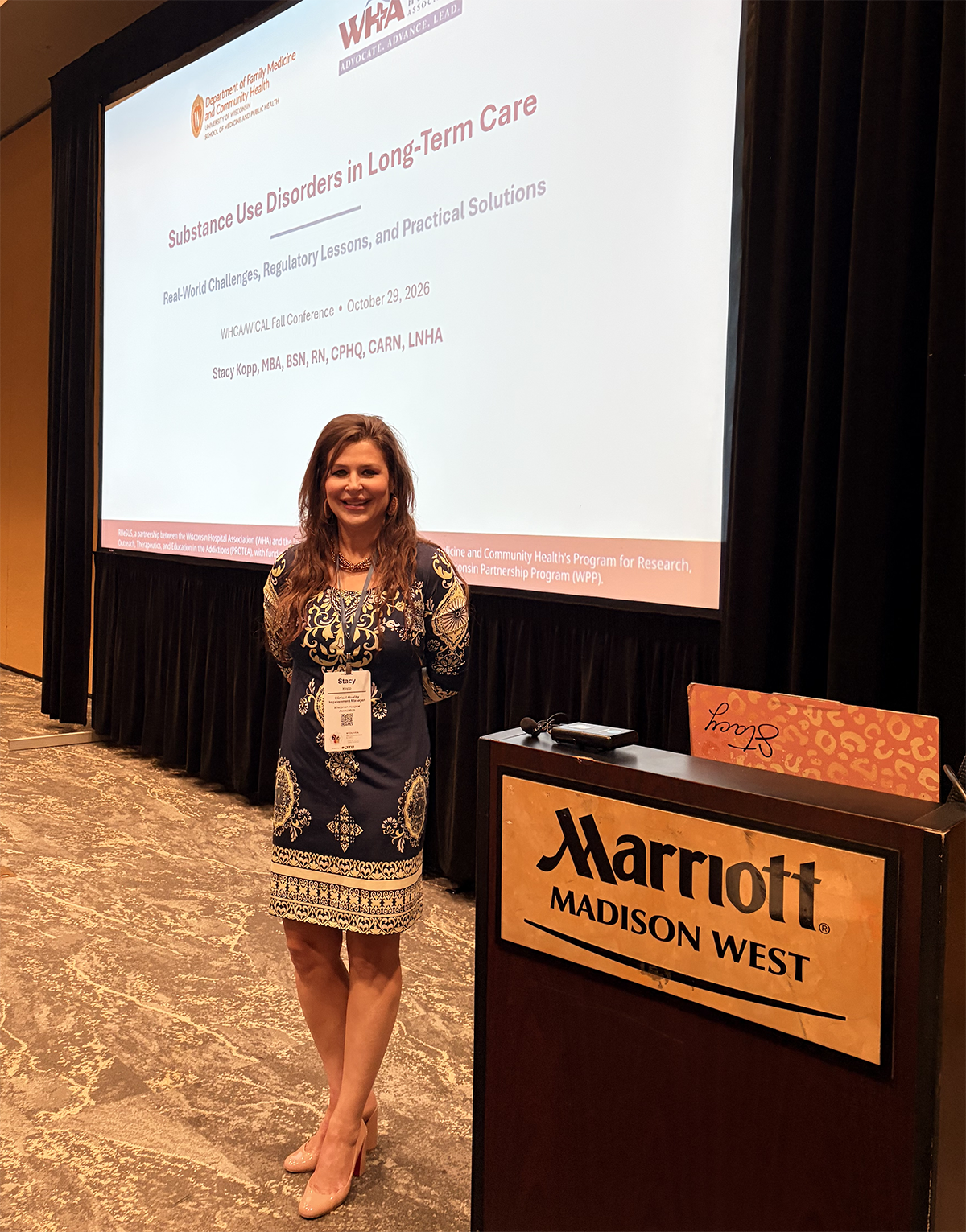 Stacy KoppWHA Clinical Quality Improvement Manager and Certified Addictions Registered Nurse Stacy Kopp presented at the Wisconsin Health Care Association (WHCA)/Wisconsin Center for Assisted Living (WiCAL) Fall Convention & Expo, Wisconsin's premier educational and networking event for long-term care professionals, on Oct. 29. The convention brought together hundreds of leaders from across the state's long-term care continuum, including nursing home and assisted living administrators, directors of nursing, quality and compliance leaders, clinicians, executive leaders and industry partners. Attendees gathered to learn about emerging trends, regulatory updates, innovative practices and strategies to improve resident care and organizational performance.
Kopp's session focused on helping long-term care providers build the confidence, partnerships and operational readiness needed to effectively care for residents with substance use disorders. Strengthening these supports can reduce placement barriers and help individuals transition safely from hospitals and other care settings into appropriate post-acute and long-term care services.
This educational presentation was supported by the Rural Health and Substance Use Support (RHeSUS) program, a collaboration between WHA and the University of Wisconsin Department of Family Medicine and Community Health, with funding from the Wisconsin Partnership Program.
Strengthening Care Transitions for People with Substance Use Disorders (SUD)
Stacy KoppWHA Clinical Quality Improvement Manager and Certified Addictions Registered Nurse Stacy Kopp presented at the Wisconsin Health Care Association (WHCA)/Wisconsin Center for Assisted Living (WiCAL) Fall Convention & Expo, Wisconsin's premier educational and networking event for long-term care professionals, on Oct. 29. The convention brought together hundreds of leaders from across the state's long-term care continuum, including nursing home and assisted living administrators, directors of nursing, quality and compliance leaders, clinicians, executive leaders and industry partners. Attendees gathered to learn about emerging trends, regulatory updates, innovative practices and strategies to improve resident care and organizational performance.
Kopp's session focused on helping long-term care providers build the confidence, partnerships and operational readiness needed to effectively care for residents with substance use disorders. Strengthening these supports can reduce placement barriers and help individuals transition safely from hospitals and other care settings into appropriate post-acute and long-term care services.
This educational presentation was supported by the Rural Health and Substance Use Support (RHeSUS) program, a collaboration between WHA and the University of Wisconsin Department of Family Medicine and Community Health, with funding from the Wisconsin Partnership Program.
IN THIS ISSUE
- President’s Column: When the Minority Party Gains the Majority
- CMS Issues Final 2027 Outpatient Rule with Site-Neutral and 340B Cuts
- Last Chance to Register for the Annual Hospital Board of Directors’ Education Event
- Southwest Health Receives 2026 Global Vision Community Partnership Award
- Strengthening Care Transitions for People with Substance Use Disorders (SUD)
EDUCATION EVENTS
Nov. 12, 2026
WHA 2026 Wisconsin Health Care Workforce Webinar Series - Part 4: Beyond Contract Labor - Modern Blueprint for a Flexible, Sustainable WorkforceNov. 17, 2026
Hospital Board EducationJan. 26, 2027
2027 WHA Health Care Leadership Academy