Quality Report
2026
Wisconsin hospitals continue to demonstrate national leadership in delivering high-quality, patient-centered care, as highlighted in the 2026 Quarter 3 Wisconsin Hospitals Quality Snapshot. Wisconsin led the nation with 44 hospitals earning five-star ratings for nurse communication, 22 hospitals receiving five-star overall patient experience ratings and 30 hospitals achieving five-star cleanliness ratings. These achievements reflect Wisconsin hospitals' sustained commitment to providing safe, compassionate and responsive care while continuously improving the patient experience. The snapshot also highlights statewide efforts to strengthen the health care workforce, advance quality improvement through education and collaboration, and support hospitals through innovative initiatives focused on workforce well-being, rural health, substance use disorder care and patient safety. Together, these accomplishments reinforce Wisconsin hospitals' dedication to improving health outcomes and delivering exceptional care for patients, families and communities across the state.


Leads the Nation
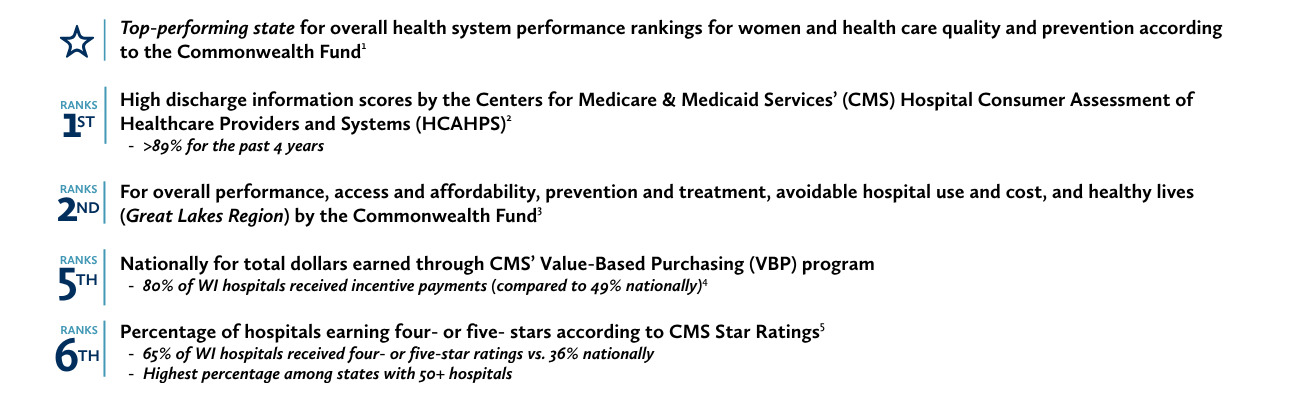
According to Becker's Hospital Review, Wisconsin hospitals lead the nation in five-star patient experience ratings. 1 - 22 Wisconsin hospitals earned five-star ratings for overall patient experience, tying Texas - a state with more than five times Wisconsin’s population - for the most five-star hospitals in the country.
Ranks #1
Forty-Four Wisconsin hospitals earn five-star ratings for nurse communication, the most of any state in the country.2 - CMS shares 10 Hospital Consumer Assessment of Healthcare Providers and Systems (HCAHPS) star ratings based on publicly reported measures. These ratings are based on data collected between July 2024 and June 2025.
Most 5-Star Ratings in the Nation
Wisconsin Ranked First in Nation of States with Cleanest Hospitals. 3 - In August, CMS survey data shows 30 Wisconsin hospitals earned 5-star cleanliness ratings, the most in the nation.
Footnotes
1 - Wisconsin Hospitals Lead the Nation in Patient Ratings for Nurse Communication
2 - Wisconsin Hospitals Lead the Nation in Five-Star Patient Experience Ratings

Wisconsin hospitals are committed to continuous quality improvement through initiatives that strengthen patient safety, clinical outcomes, care coordination and workforce well-being. Across the state, hospitals are working together to share best practices, test innovative approaches and implement evidence-based strategies that improve care for the patients and communities they serve. These efforts are producing measurable results, with many quality indicators featured in this snapshot showing improvement over the most recent 12 months of publicly reported data. The information below highlights Wisconsin Hospital Association programs, resources and collaborative opportunities that support hospitals in sustaining this progress and advancing excellence in quality and patient safety.
Caring for Wisconsin’s Caregivers
Wisconsin Caring for Caregivers Wellbeing
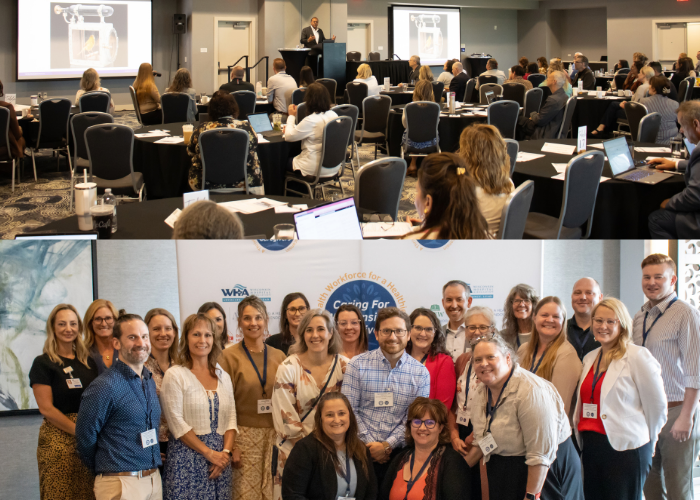
Nearly 100 Wisconsin health care leaders gathered September 10 for the inaugural Caring for Wisconsin's Caregivers: 2026 WHA Healthcare Workforce Well-Being Summit to advance strategies that support Wisconsin's health care workforce. The event marked the launch of Phase 2 of Wisconsin's statewide health care workforce well-being initiative and highlighted the importance of caregiver well-being as a cornerstone of quality patient care and organizational success. The summit celebrated Wisconsin becoming the third state to launch a statewide health care workforce well-being initiative in partnership with the Dr. Lorna Breen Foundation and the first to implement The Breen Scale™ statewide. Participating organizations can use the tool to assess workforce well-being maturity and access resources tailored to their needs. Wisconsin hospitals and health systems that have earned designation as Wellbeing First Champions™ through the Dr. Lorna Breen Foundation were also recognized.
Visit the Caring for Wisconsin’s Caregivers Homepage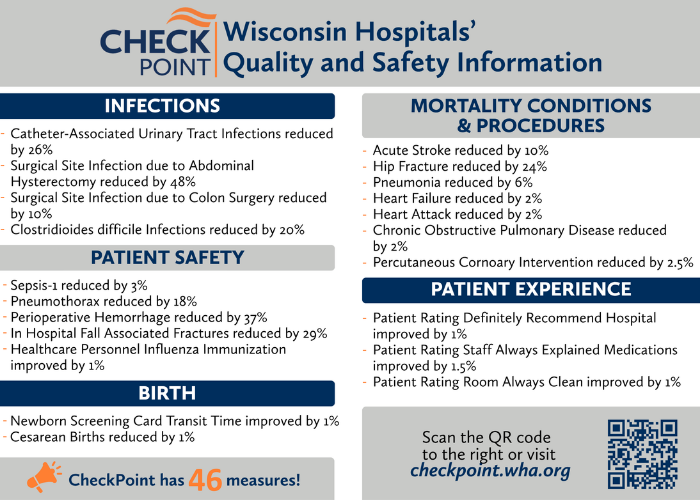
CheckPoint
CheckPoint
CheckPoint provides transparent information on hospital quality, safety and patient care across Wisconsin. It helps patients, families and health care leaders compare performance and make informed decisions using credible, standardized data.
Visit the CheckPoint Website
Opioid and Substance Use Educational & Clinical Resources
Opioid and Substance Misuse
As the final year of the five-year Rural Health & Substance Use Clinical Support (RHeSUS) Program continues, efforts remain focused on advancing substance use disorder (SUD) education and collaboration across Wisconsin. Since 2022, RHeSUS has hosted 14 Substance Use Disorders Management Boot Camps and engaged more than 450 health care professionals, strengthening the delivery of evidence-based care for those affected by SUDs. The RHeSUS Lunch & Learn webinar series concluded in September, while broader RHeSUS activities continue. Current efforts include collaboration with post-acute and long-term care partners to address barriers to care transitions for patients with SUD and improve access to appropriate services. Program activities will continue with a free, two-day Substance Use Disorders Management Boot Camp on October 15-16 in De Pere, providing practical, case-based training to strengthen SUD recognition, treatment and management in general medical settings. This program is possible through a partnership with the Wisconsin Hospital Association. Funding for the Wisconsin Rural Health and Substance Use Clinical Support Program was provided by the University of Wisconsin School of Medicine and Public Health through the Wisconsin Partnership Program.
Visit the Opioid and Substance Use Educational & Clinical Resources Page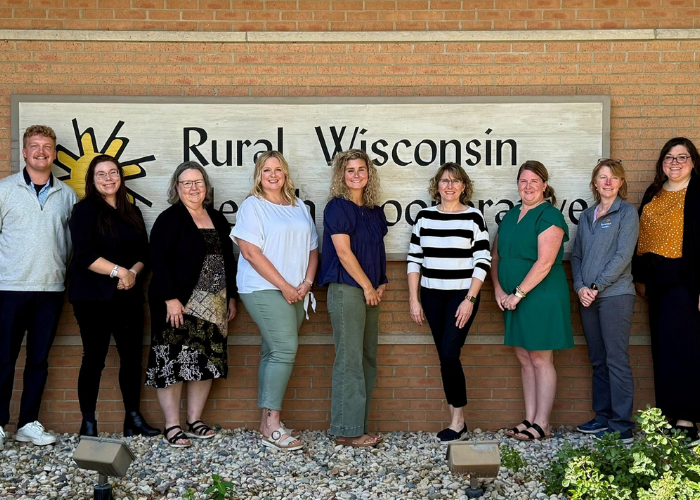
Quality Residency
Quality Residency
The 2026-2027 Wisconsin Quality Residency program kicked off September 9. This 10-month program is a combination of in-person and virtual sessions and covers many quality-related topics, including regulatory requirements, risk management, data reporting and quality improvement methods and is designed for emerging health care quality leaders with limited experience in quality improvement and patient safety. These new quality residents are from seven Wisconsin hospitals/health systems. Sponsored by the Wisconsin Office of Rural Health (WORH), the program is a collaboration between the Wisconsin Hospital Association (WHA) and the Rural Wisconsin Health Cooperative (RWHC) The WHA Quality Residency Program is aligned with the nationally recognized competency domains established by the National Association for Healthcare Quality (NAHQ) for the Certified Professional in Healthcare Quality (CPHQ) credential.
Visit the Quality Residency Homepage
Superior Health Quality Alliance
Superior Health Quality Alliance
The Superior Health Quality Alliance (Superior Health) continues to serve as a trusted quality improvement partner across Wisconsin through the CMS 13th Statement of Work (13SOW). With 465 participating organizations statewide, the CMS 13SOW work supported by Superior Health creates a broad network of health care partners dedicated to improving safety, quality, equity and patient outcomes throughout Wisconsin. The breakdown of organizations is:
Wisconsin Dental Pain Protocol
Wisconsin Dental Pain Protocol
The Wisconsin Dental Pain Protocol (WDPP) continued to build upon its prior achievements using data-driven decision-making. Using a combination of site-provided referral data, hospital data and WHA claims data, existing sites revisited their processes and outcomes using process flow diagrams that included quantitative results which generated renewed interest in WDPP refresher training for two health systems. Through the WHA claims data for non-traumatic dental pain, the WDPP team was able to present information on the access issues faced by those with non-traumatic dental pain (NTDP) to multiple audiences. This resulted in commitments to implement the WDPP by FQHC and tribal dental clinics across Western, Northern and Southeastern Wisconsin. Finally, our use of qualitative information from Community of Practice meetings and site reports has furthered the WDPP team’s commitment to supporting new and existing health systems and partners.
Visit the WDPP Resources Page
Wisconsin Office of Rural Health - Swing Bed Optimization Program
Wisconsin Office of Rural Health - Swing Bed Optimization Program
The Swing Bed Optimization Program recently concluded another successful cohort, with four Critical Access Hospitals (CAHs) completing the program in August. Supported through FLEX grant funding from the Wisconsin Office of Rural Health (WORH), the initiative is designed to help CAHs strengthen swing bed performance and sustainability through a focus on high-quality care, positive patient outcomes, regulatory compliance and swing bed utilization. Since late 2024, 11 Wisconsin CAHs have participated in the program. This most recent cohort benefited from three educational sessions focused on Regulatory Compliance, Eligibility Criteria and Optimization Strategies, and Marketing and Promotion, along with technical assistance and individualized support. A key highlight of the program was the strong peer learning and engagement opportunities. Two peer best practice sharing sessions allowed experienced CAHs to provide mentorship, practical strategies and real-world insights to participants seeking to enhance or expand their swing bed services. One peer-sharing hospital reported a 64% increase in the number of swing bed patients and a 24% increase in average swing bed length of stay since participating in the Swing Bed Optimization Program in 2025, demonstrating the program's potential impact on hospital performance and patient access to post-acute care services.
Visit the WORH - Swing Bed Optimization Program Homepage





Hospital Quality Improvement Projects
The following highlights a range of stories submitted by hospitals across Wisconsin, each offering a unique example of how teams are advancing quality and patient safety. These contributions may include participants in WHA’s Excellence in Quality and Patient Safety awards, presentations at the Wisconsin Health Care Quality Showcase in the Capitol rotunda during Advocacy Day or simply from those with a desire to share meaningful work with peers across the state. Together, these stories reflect the shared commitment to learning, collaboration and continuous improvement across our state. View the video below from the 2026 Health Care Quality Showcase or click on a hospital to view their hospital quality improvement project.
- Ascension SE Wisconsin Hospital – St. Joseph
- Aspirus Stevens Point Hospital, Stevens Point
- Bellin Health Oconto Hospital, Oconto
- Children's Wisconsin
- Emplify Health by Bellin, Green Bay
- Emplify Health by Gundersen
- Froedtert ThedaCare Health
- Mayo Clinic Health System - Red Cedar in Menomonie
- Mayo Clinic Health System, Eau Claire
- Reedsburg Area Medical Center, Reedsburg
- SSM Health St. Mary's Hospital - Madison
- SSM Health Wisconsin Region
- The Richland Hospital, Inc. - Richland Center
- Wisconsin Dental Pain Protocol