Click here to view past issues
IN THIS ISSUE
EDUCATION EVENTS
Nov. 12, 2026
WHA 2026 Wisconsin Health Care Workforce Webinar Series - Part 4: Beyond Contract Labor - Modern Blueprint for a Flexible, Sustainable WorkforceNov. 17, 2026
Hospital Board EducationJan. 26, 2027
2027 WHA Health Care Leadership AcademyClick here to view education event calendar
View more issues of The Valued Voice
Sign Up for WHA's Newsletter


Wisconsin Worker's Compensation Premiums Fall for 11th Straight Year
Wisconsin employers continue to benefit from ready access to high-quality worker’s compensation care
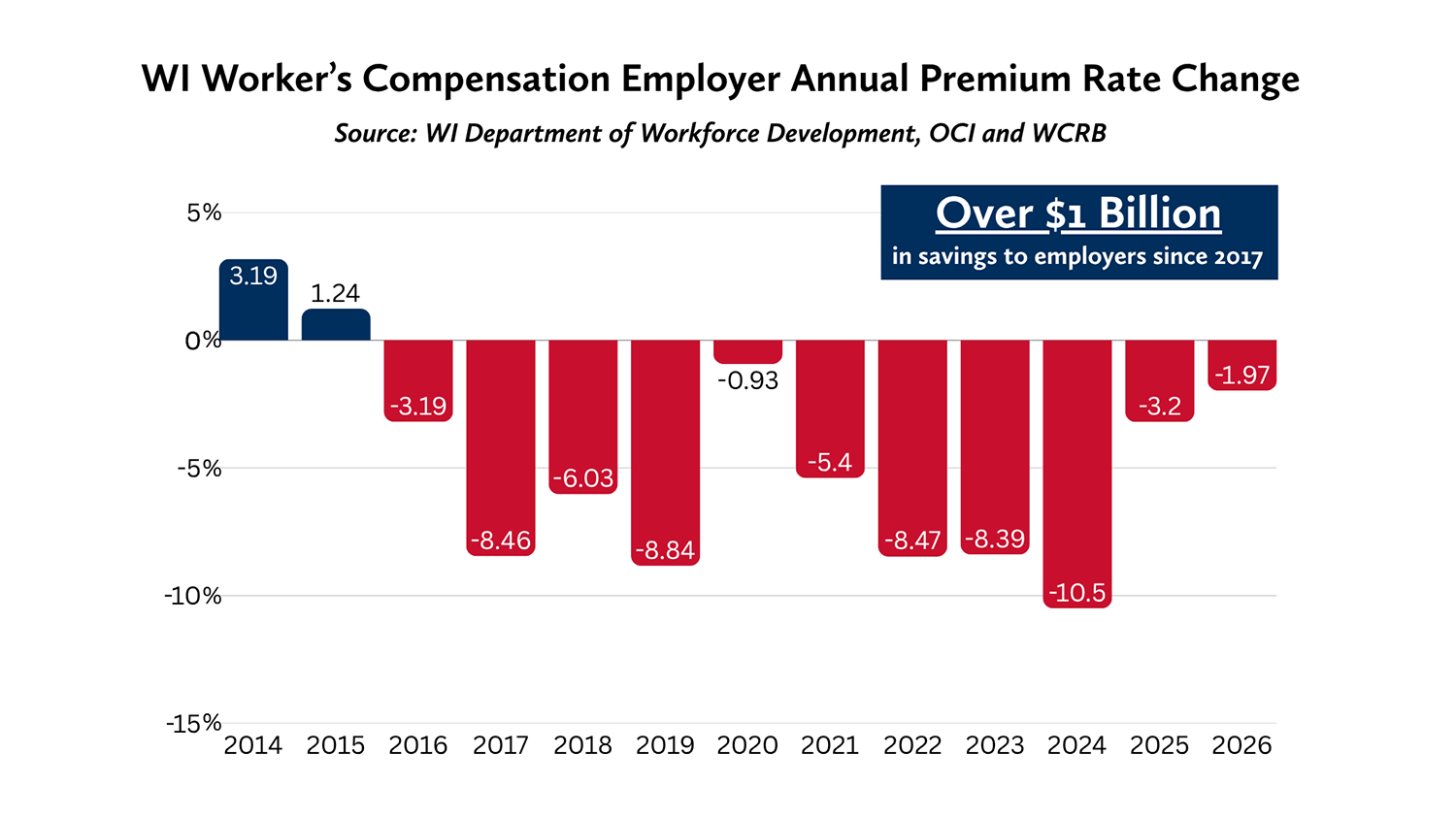
Earlier this month, the Wisconsin Department of Workforce Development (DWD) and the Office of the Commissioner of Insurance (OCI) announced that average premium rates for the worker’s compensation program dropped 1.97% beginning Oct. 1, 2026, saving employers an estimated $36 million over the coming year. This is the 11th year in a row that worker’s compensation program premiums have decreased, bringing the state's cumulative savings for employers to well over the $1 billion milestone first reported in 2024. Wisconsin's rate streak reflects a system that gives injured workers the care they deserve and returns them to work quickly—critical components that help prevent injuries from worsening into total or permanent disabilities.
This news was praised by both DWD Secretary Amy Pechacek and Insurance Commissioner Nathan Houdek. Pechacek explained workplaces that are "fair, just and safe" give Wisconsin employers a competitive edge in recruitment and retention, and Houdek touted, “employers can continue to count on a competitive insurance marketplace for affordable, high-quality coverage.”
Wisconsin created the first worker’s compensation program in the country, and the latest data is further evidence that the state’s program and our high-quality, high-value health care system continues to set us apart from the rest of the country—making Wisconsin an attractive place to do business. Hospitals and health systems, along with medical providers, are not only providing the care needed to make these outcomes a reality, but they continue to partner with local manufacturers and other employers to reduce Wisconsin’s workplace injury rate and support employers looking to implement better safety and wellness programs.
Wisconsin should be proud of the continued success of this program and should be wary of any efforts to artificially limit health care payments for treating injured workers by forcing an artificial, non-negotiated fee schedule on health care. Such a move could lead to fewer health care clinicians participating in the worker’s compensation program, meaning longer wait times and slower return to work for injured patients.
This news was also praised in a recent press release by the four health care liaisons to the Worker’s Compensation Advisory Council. WHA President and CEO Kyle O’Brien was quoted in the release saying, "Eleven straight years of lower premiums shows what happens when a system is built to get people the right care quickly and get them back on the job. Injured workers get timely treatment, providers are paid fairly, and businesses keep seeing savings. That's a balance worth protecting."
Wisconsin Worker's Compensation Premiums Fall for 11th Straight Year
Wisconsin employers continue to benefit from ready access to high-quality worker’s compensation care
Earlier this month, the Wisconsin Department of Workforce Development (DWD) and the Office of the Commissioner of Insurance (OCI) announced that average premium rates for the worker’s compensation program dropped 1.97% beginning Oct. 1, 2026, saving employers an estimated $36 million over the coming year. This is the 11th year in a row that worker’s compensation program premiums have decreased, bringing the state's cumulative savings for employers to well over the $1 billion milestone first reported in 2024. Wisconsin's rate streak reflects a system that gives injured workers the care they deserve and returns them to work quickly—critical components that help prevent injuries from worsening into total or permanent disabilities.
This news was praised by both DWD Secretary Amy Pechacek and Insurance Commissioner Nathan Houdek. Pechacek explained workplaces that are "fair, just and safe" give Wisconsin employers a competitive edge in recruitment and retention, and Houdek touted, “employers can continue to count on a competitive insurance marketplace for affordable, high-quality coverage.”
Wisconsin created the first worker’s compensation program in the country, and the latest data is further evidence that the state’s program and our high-quality, high-value health care system continues to set us apart from the rest of the country—making Wisconsin an attractive place to do business. Hospitals and health systems, along with medical providers, are not only providing the care needed to make these outcomes a reality, but they continue to partner with local manufacturers and other employers to reduce Wisconsin’s workplace injury rate and support employers looking to implement better safety and wellness programs.
Wisconsin should be proud of the continued success of this program and should be wary of any efforts to artificially limit health care payments for treating injured workers by forcing an artificial, non-negotiated fee schedule on health care. Such a move could lead to fewer health care clinicians participating in the worker’s compensation program, meaning longer wait times and slower return to work for injured patients.
This news was also praised in a recent press release by the four health care liaisons to the Worker’s Compensation Advisory Council. WHA President and CEO Kyle O’Brien was quoted in the release saying, "Eleven straight years of lower premiums shows what happens when a system is built to get people the right care quickly and get them back on the job. Injured workers get timely treatment, providers are paid fairly, and businesses keep seeing savings. That's a balance worth protecting."
IN THIS ISSUE
EDUCATION EVENTS
Nov. 12, 2026
WHA 2026 Wisconsin Health Care Workforce Webinar Series - Part 4: Beyond Contract Labor - Modern Blueprint for a Flexible, Sustainable WorkforceNov. 17, 2026
Hospital Board EducationJan. 26, 2027
2027 WHA Health Care Leadership Academy