
Click here to view past issues
IN THIS ISSUE
EDUCATION EVENTS
Oct. 15, 2026
Substance Use Disorders Management Boot CampOct. 15, 2026
Culture College – Breakthrough Strategies for Creating and Sustaining a Magnetic CultureOct. 20, 2026
WIpop Virtual Training: Session 1Click here to view education event calendar
View more issues of The Valued Voice
Sign Up for WHA's Newsletter


HRSA Administrator Joins WHA Board for Discussion on 340B, Workforce and Federal Partnership
Tom Engels, Administrator of the Health Resources and Services Administration (HRSA) within the U.S. Department of Health and Human Services, joined the WHA Board of Directors June 25 for an engaging discussion focused on 340B, workforce challenges, telehealth and the continued federal partnership between HRSA and Wisconsin hospitals.
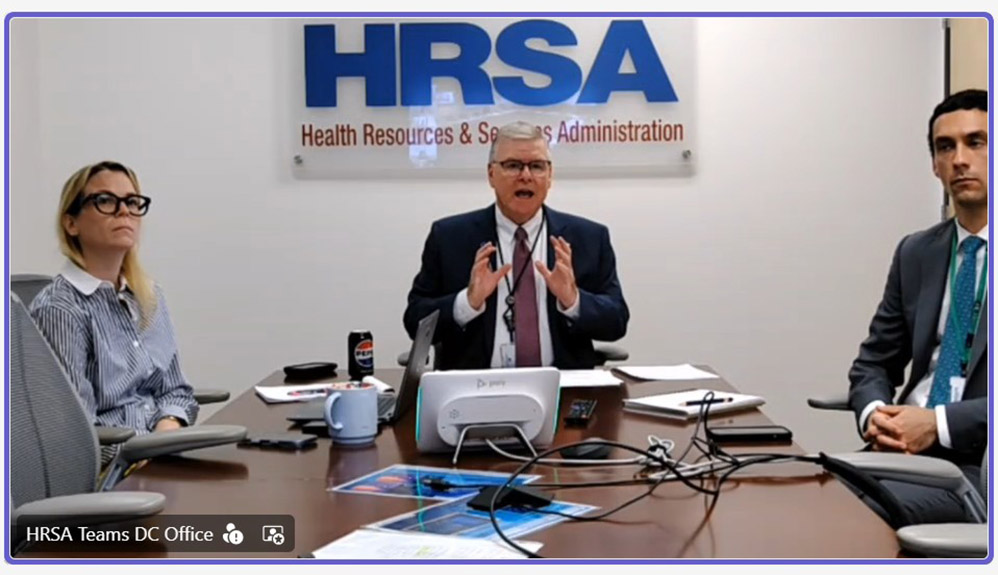 HRSA Administrator Tom Engels
WHA President and CEO Kyle O’Brien opened the conversation by thanking Engels and HRSA for their partnership with Wisconsin hospitals, particularly around the 340B program. O’Brien noted HRSA’s work to respond to pharmaceutical manufacturer actions affecting hospitals, including efforts related to contract pharmacy restrictions and drug company rebate models.
“Over the years, HRSA has been a great partner in defending us from some of these drug company practices, denying discounts at contract pharmacies and most recently preventing drug companies from moving unilaterally to back-end rebates,” O’Brien said. “We greatly appreciate your work there.”
Engels, a Wisconsin native and former deputy secretary of the Wisconsin Department of Health Services, opened his remarks by emphasizing his long-standing connection to the state and to hospitals. Engels noted that he grew up in Shullsburg and that his mother served as a hospital administrator in Darlington. He also recognized WHA’s leadership and the strong working relationship Wisconsin hospitals have built with HRSA over many years, noting that HRSA is focused on several issues important to hospitals, including 340B, workforce, telehealth and other tools to help hospitals support patients.
“We know there’s very challenging issues, 340B obviously being one of them,” Engels said. “We also know that health workforce is a significant challenge that here at HRSA we are working to try to help as much as we possibly can.”
 WHA’s June 25, 2026 Board meeting
Much of the discussion focused on the importance of 340B to Wisconsin hospitals, especially rural hospitals that rely on program savings to sustain essential but often underfunded services. WHA Board Chair, Door County Medical Center President and CEO Brian Stephens described the direct connection between 340B and local access to care.
“For Door County Medical Center, I know I’m not alone… The 340B program has just been tremendously important to us over the years in terms of really benefiting our community,” Stephens said.
Stephens specifically noted that 340B helps Door County Medical Center maintain essential community services that may not otherwise be financially sustainable.
“Our birthing center, we have a very low volume birthing center,” Stephens said. “But if you think about the geography of Door County, it’s imperative for us to maintain our birthing center so that a mom living at the tip of the peninsula wouldn’t have to drive all the way to Green Bay, which would be about two hours to get to the next nearest birthing center.”
Stephens also pointed to behavioral health and skilled nursing care as examples of services supported by 340B savings.
Engels acknowledged the importance of 340B to hospitals using the program to support access to care while also noting HRSA’s limited regulatory authority and the legal challenges surrounding the program. Engels said HRSA is seeking to place appropriate guardrails around 340B and evaluate the potential impact of a proposed rebate pilot model.
“We know a lot of hospitals, especially in the rural areas, use that program to help carry coverage,” Engels said. “People want to use those dollars, put them back into the programs to allow them to continue to provide great care for your patients.”
Heather Schimmers, President of Emplify Health, asked how HRSA would evaluate the proposed rebate pilot and determine whether it succeeds or fails.
Engels responded that HRSA is working through the federal review process and public comment period, including reviewing feedback from stakeholders on the operational and financial impact of a rebate model. He said HRSA will work with CMS to better understand whether duplicate rebates are occurring and emphasized that pharmaceutical companies would be required to meet the 10-day rebate requirement. If they do not, HRSA could remove them from the rebate model.
“We have insisted that the pharmaceutical companies must meet their 10-day requirement before there are actions that we can take, which means we can pull them out of the rebate model from the very beginning if they do not,” Engels said.
Engels said HRSA has been concerned that pharmaceutical manufacturers could pursue broader rebate models on their own, which he said began happening earlier this year.
Stephens raised a follow-up concern about whether major pharmacies may decide not to participate in contract pharmacy arrangements if the proposed rebate model is too complex administratively.
“The fear for us is that pharmacies aren’t going to want to participate, whether we want to comply with the rebate process or not,” Stephens said.
Engels said HRSA has not yet had those conversations with major pharmacies because of pending litigation but reiterated that HRSA understands the ways many hospitals depend on 340B savings to sustain care.
Reedsburg Area Medical Center President and CEO Bob Van Meeteren also described how 340B supports programs at his independent critical access hospital and rural health clinic.
“At Reedsburg Area Medical Center, we use our 340B dollars first and foremost for a free prescription program. People who cannot afford their prescriptions—we cover the cost of their prescriptions,” Van Meeteren said.
Van Meeteren also highlighted other community services supported by 340B, including behavioral health and a dental clinic partnership with a federally qualified health center.
“We just recently built out a dental clinic for a [Federally Qualified Health Center] to come into our town and provide dental services to everybody, regardless of their ability to pay for dental services,” Van Meeteren said. “We also operate a behavioral health program for children, adults and everybody in between.”
Van Meeteren raised concerns about the impact of pharmaceutical company actions and the potential financial burden of a rebate model on small, independent hospitals. He also noted that contract pharmacy restrictions have already significantly reduced the benefit of the program for many hospitals.
“You’re asking my small, independent, critical access hospital to float a 10-day interest-free loan,” Van Meeteren said.
Engels acknowledged that HRSA heard during the first round of feedback that some entities were concerned about whether they would have the financial capacity to front-load the cost of expensive drugs under a rebate model. He added that HRSA’s goal is to determine whether drugs in the 340B program are being used in the way Congress intended, including whether the program is helping low-income individuals access prescription drugs.
John Russell, President and CEO of Prairie Ridge Health, thanked Engels for his responsiveness and partnership with hospitals during the COVID-19 pandemic and for his continued support on federal issues important to Wisconsin hospitals.
“Thanks so much for the conversations that we had during the pandemic and for your help for not only Wisconsin hospitals, but hospitals across the country during that time,” Russell said. “I appreciated you listening and your group responding.”
O’Brien closed the discussion by noting that while much of the conversation focused on 340B, WHA also values HRSA’s broader work on workforce, health professional shortage areas and other programs that support hospitals and patients.
“We spent a lot of time on 340B because, frankly, it’s just a huge issue for us,” O’Brien said. “We know that you are engaged in so much else… and we will continue our engagement with you on things like workforce, your work on health professional shortage areas, all these other things that you all do.”
Following the Board meeting, WHA’s officers sent a letter to Engels outlining the multitude of concerns WHA members have with proposed rebate models and other requirements that have been unilaterally imposed by pharmaceutical manufactures onto hospitals, all of which detract from the goals of the 340B program.
HRSA Administrator Joins WHA Board for Discussion on 340B, Workforce and Federal Partnership
Tom Engels, Administrator of the Health Resources and Services Administration (HRSA) within the U.S. Department of Health and Human Services, joined the WHA Board of Directors June 25 for an engaging discussion focused on 340B, workforce challenges, telehealth and the continued federal partnership between HRSA and Wisconsin hospitals.
HRSA Administrator Tom Engels
WHA President and CEO Kyle O’Brien opened the conversation by thanking Engels and HRSA for their partnership with Wisconsin hospitals, particularly around the 340B program. O’Brien noted HRSA’s work to respond to pharmaceutical manufacturer actions affecting hospitals, including efforts related to contract pharmacy restrictions and drug company rebate models.
“Over the years, HRSA has been a great partner in defending us from some of these drug company practices, denying discounts at contract pharmacies and most recently preventing drug companies from moving unilaterally to back-end rebates,” O’Brien said. “We greatly appreciate your work there.”
Engels, a Wisconsin native and former deputy secretary of the Wisconsin Department of Health Services, opened his remarks by emphasizing his long-standing connection to the state and to hospitals. Engels noted that he grew up in Shullsburg and that his mother served as a hospital administrator in Darlington. He also recognized WHA’s leadership and the strong working relationship Wisconsin hospitals have built with HRSA over many years, noting that HRSA is focused on several issues important to hospitals, including 340B, workforce, telehealth and other tools to help hospitals support patients.
“We know there’s very challenging issues, 340B obviously being one of them,” Engels said. “We also know that health workforce is a significant challenge that here at HRSA we are working to try to help as much as we possibly can.”
WHA’s June 25, 2026 Board meeting
Much of the discussion focused on the importance of 340B to Wisconsin hospitals, especially rural hospitals that rely on program savings to sustain essential but often underfunded services. WHA Board Chair, Door County Medical Center President and CEO Brian Stephens described the direct connection between 340B and local access to care.
“For Door County Medical Center, I know I’m not alone… The 340B program has just been tremendously important to us over the years in terms of really benefiting our community,” Stephens said.
Stephens specifically noted that 340B helps Door County Medical Center maintain essential community services that may not otherwise be financially sustainable.
“Our birthing center, we have a very low volume birthing center,” Stephens said. “But if you think about the geography of Door County, it’s imperative for us to maintain our birthing center so that a mom living at the tip of the peninsula wouldn’t have to drive all the way to Green Bay, which would be about two hours to get to the next nearest birthing center.”
Stephens also pointed to behavioral health and skilled nursing care as examples of services supported by 340B savings.
Engels acknowledged the importance of 340B to hospitals using the program to support access to care while also noting HRSA’s limited regulatory authority and the legal challenges surrounding the program. Engels said HRSA is seeking to place appropriate guardrails around 340B and evaluate the potential impact of a proposed rebate pilot model.
“We know a lot of hospitals, especially in the rural areas, use that program to help carry coverage,” Engels said. “People want to use those dollars, put them back into the programs to allow them to continue to provide great care for your patients.”
Heather Schimmers, President of Emplify Health, asked how HRSA would evaluate the proposed rebate pilot and determine whether it succeeds or fails.
Engels responded that HRSA is working through the federal review process and public comment period, including reviewing feedback from stakeholders on the operational and financial impact of a rebate model. He said HRSA will work with CMS to better understand whether duplicate rebates are occurring and emphasized that pharmaceutical companies would be required to meet the 10-day rebate requirement. If they do not, HRSA could remove them from the rebate model.
“We have insisted that the pharmaceutical companies must meet their 10-day requirement before there are actions that we can take, which means we can pull them out of the rebate model from the very beginning if they do not,” Engels said.
Engels said HRSA has been concerned that pharmaceutical manufacturers could pursue broader rebate models on their own, which he said began happening earlier this year.
Stephens raised a follow-up concern about whether major pharmacies may decide not to participate in contract pharmacy arrangements if the proposed rebate model is too complex administratively.
“The fear for us is that pharmacies aren’t going to want to participate, whether we want to comply with the rebate process or not,” Stephens said.
Engels said HRSA has not yet had those conversations with major pharmacies because of pending litigation but reiterated that HRSA understands the ways many hospitals depend on 340B savings to sustain care.
Reedsburg Area Medical Center President and CEO Bob Van Meeteren also described how 340B supports programs at his independent critical access hospital and rural health clinic.
“At Reedsburg Area Medical Center, we use our 340B dollars first and foremost for a free prescription program. People who cannot afford their prescriptions—we cover the cost of their prescriptions,” Van Meeteren said.
Van Meeteren also highlighted other community services supported by 340B, including behavioral health and a dental clinic partnership with a federally qualified health center.
“We just recently built out a dental clinic for a [Federally Qualified Health Center] to come into our town and provide dental services to everybody, regardless of their ability to pay for dental services,” Van Meeteren said. “We also operate a behavioral health program for children, adults and everybody in between.”
Van Meeteren raised concerns about the impact of pharmaceutical company actions and the potential financial burden of a rebate model on small, independent hospitals. He also noted that contract pharmacy restrictions have already significantly reduced the benefit of the program for many hospitals.
“You’re asking my small, independent, critical access hospital to float a 10-day interest-free loan,” Van Meeteren said.
Engels acknowledged that HRSA heard during the first round of feedback that some entities were concerned about whether they would have the financial capacity to front-load the cost of expensive drugs under a rebate model. He added that HRSA’s goal is to determine whether drugs in the 340B program are being used in the way Congress intended, including whether the program is helping low-income individuals access prescription drugs.
John Russell, President and CEO of Prairie Ridge Health, thanked Engels for his responsiveness and partnership with hospitals during the COVID-19 pandemic and for his continued support on federal issues important to Wisconsin hospitals.
“Thanks so much for the conversations that we had during the pandemic and for your help for not only Wisconsin hospitals, but hospitals across the country during that time,” Russell said. “I appreciated you listening and your group responding.”
O’Brien closed the discussion by noting that while much of the conversation focused on 340B, WHA also values HRSA’s broader work on workforce, health professional shortage areas and other programs that support hospitals and patients.
“We spent a lot of time on 340B because, frankly, it’s just a huge issue for us,” O’Brien said. “We know that you are engaged in so much else… and we will continue our engagement with you on things like workforce, your work on health professional shortage areas, all these other things that you all do.”
Following the Board meeting, WHA’s officers sent a letter to Engels outlining the multitude of concerns WHA members have with proposed rebate models and other requirements that have been unilaterally imposed by pharmaceutical manufactures onto hospitals, all of which detract from the goals of the 340B program.
IN THIS ISSUE
EDUCATION EVENTS
Oct. 15, 2026
Substance Use Disorders Management Boot CampOct. 15, 2026
Culture College – Breakthrough Strategies for Creating and Sustaining a Magnetic CultureOct. 20, 2026
WIpop Virtual Training: Session 1