
Workforce and Team-Based Care
Among the many issues facing the field of health care, none is more important than solving the growing workforce crisis in order to sustain the high-quality, high-value health care Wisconsin citizens expect and deserve. This page provides more information on how WHA and Wisconsin hospitals are working to resolve this critical issue.
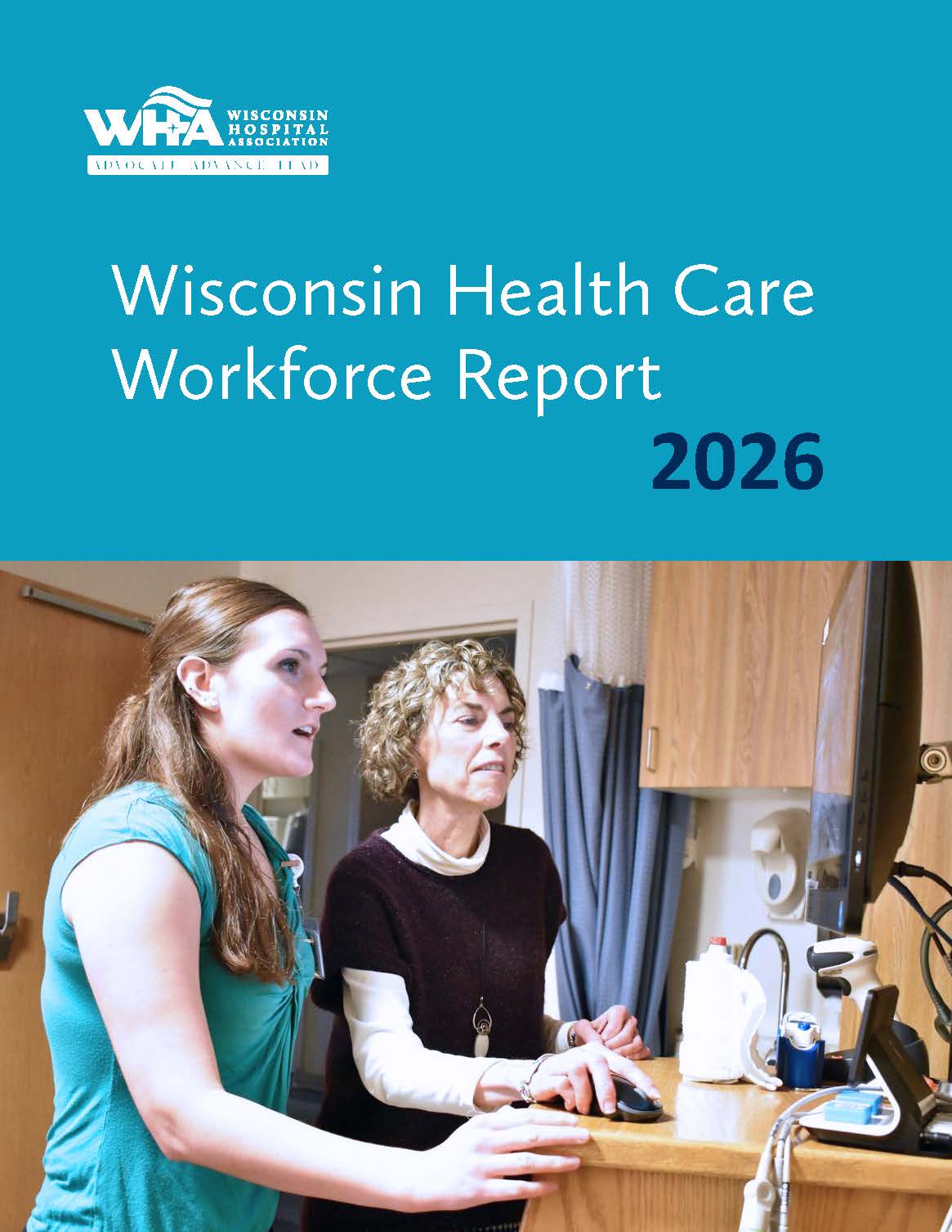 Wisconsin’s Health Care Workforce is Growing, But Not Fast Enough to Meet Rising Demand
Wisconsin has done a great job of growing the healthcare workforce since WHA began raising the alarm. Advancements have been made in building team models and technology that support patients and providers, and new Wisconsin policies are helping health care professionals work to their full potential. Unfortunately, burdensome payer requirements and unnecessary or overly complex regulations are such that, even with the progress made, the health care workforce is falling behind.
The payer and regulatory burden getting between health care teams and the patients they care for is a correctable cause that must be addressed with greater urgency and, very intentionally, tops the list of this year’s WHA Wisconsin Health Care Workforce recommendations.
Read the full 2026 WHA Health Care Workforce Report to learn how we can strengthen Wisconsin’s health care workforce for the future.
Strategies

1. Grow Faster
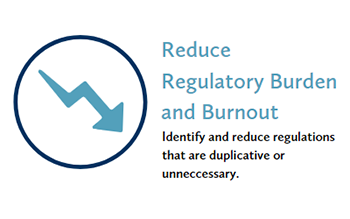
For instance, WHA partnered with Wisconsin’s two medical schools to advance a matching-grant program for hospitals and health systems interested in expanding Graduate Medical Education capacity in their community. To date, the program has created 23 brand new residency programs and provided funding to expand 17 existing residency programs – in total, providing 193 new residency training opportunities for new physicians in Wisconsin who would have otherwise likely trained in another state. These additional residency opportunities will graduate 86 new physicians for Wisconsin each and every year once the pipeline is full.
WHA also championed proposals, modeled after the successful GME initiative above, to provide resources for rural hospitals seeking to increase training capacity for advanced practice clinicians (APCs) and allied health professionals in rural communities.
These grant programs, successfully administered by the Wisconsin Department of Health Services, are based on WHA’s data-driven 86% equation to "Grow Our Own." As of November 2024, DHS has awarded over $61 million in the form of 144 "Grow Our Own" grants. Since the new GME, Allied Health and APC programs are matching grants the end result is a $98 million investment in Wisconsin training to grow Wisconsin’s health care workforce.
2. Recruit, Retain and Protect
Wisconsin values the outstanding talent and effort of the health care workers serving patients, families and communities throughout the state. Wisconsin also recognizes the unique challenges related to health care work, and has enacted several laws advanced by WHA and its members to address key concerns of the state’s health care workforce.
 Wisconsin proactively addresses key health care worker concerns:
- Wisconsin law protects its health care workers from violence and threats: In 2022, Wisconsin enacted the most comprehensive criminal prohibition against battery and threats of violence against health care workers and their families in the nation, including penalties of up to six years in prison.
- Wisconsin law protects its health care workers from efforts to criminalize medical errors: Wisconsin’s Quality Improvement Act prevents prosecutors from bringing criminal charges for good-faith medical mistakes.
- Wisconsin law protects error and incident reports from being used against a health care worker in a malpractice suit: Wisconsin’s Quality Improvement Act embraces the idea that patient safety isn’t improved through courtroom subpoenas and depositions, but is advanced through quality improvement processes that rely on honest reporting of incidents and errors.
- Wisconsin’s balanced medical malpractice system protects both professionals and patients: Wisconsin’s comprehensive and unique medical liability system caps non-economic damages at $750,000, while ensuring that patients receive100% of their economic losses for medical expenses and lost earnings. This system has kept medical liability insurance costs in Wisconsin among the lowest in the nation.
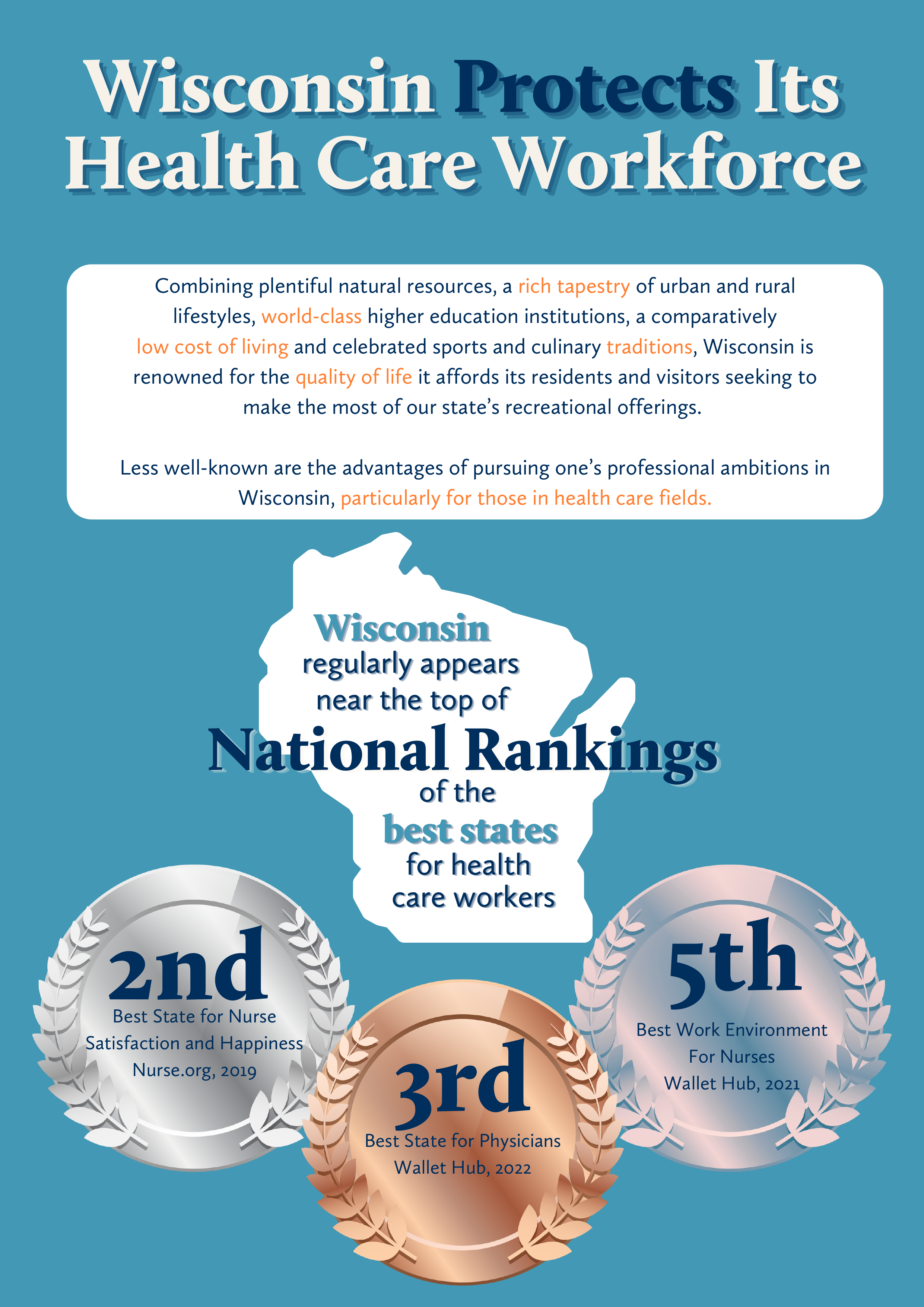
Wisconsin regularly appears near the top of National Rankings of the best states for health care workers, including:
- 2nd Best State for Nurse Satisfaction and Happiness (Nurse.org, 2019)
- 3rd Best State for Physicians (Wallet Hub, 2022)
- 5th Best Work Environment for Nurses (Wallet Hub, 2021)
3. Reduce Regulatory Burden and Burnout
As one of the most regulated industries in the state, Wisconsin’s hospitals and health systems are burdened with significant levels of regulatory compliance from federal and state agencies.
 Recent data has shown that the average size hospitals dedicates 59 full time equivalent positions, a quarter of which are providers like physicians and nurses, to regulatory compliance. The cost of this regulatory compliance is roughly $1,200 for every patient admission.
WHA provides leadership to members and policymakers by identifying regulations that are either duplicative or unnecessary, creating adding more work for health care providers and more cost to patients seeking care in Wisconsin hospitals.
WHA also engages with state agencies, such as the Department of Safety and Professional Services, to ensure that good health care policy, like licensure compacts, is implemented to help support the workforce.
WHA spearheaded Wisconsin 2021 Act 10 to make permanent changes enacted to cope with COVID, and this new law has allowed hospitals and health systems to get health care professionals working quicker in Wisconsin, but more change is needed. Licensure delays continue to create a regulatory barrier and a negative experience for health care workers before they can even enter the Wisconsin health care workforce.
Wisconsin can welcome health care professionals by improving the licensing experience:
- Utilize graduation and national certification exams to expedite preliminary licensure
- Lengthen renewal timelines
- Eliminate unnecessary legal review
WHA and WHA members will continue to identify opportunities to reduce regulatory burden and will oppose efforts to increase regulation or impose mandates on an already over-regulated workforce.
Relevant Videos
Resources
WHA and Workforce Leaders Weigh in on Workforce Burdens
Sep. 24, 2026WHA Testimony Supports Nurse Faculty Rule Revisions
Sep. 10, 2026Board of Nursing Holds Hearing on Interim APRN Rules
Sep. 10, 2026