Children’s Wisconsin partners with City of Milwaukee, Milwaukee Public Schools and other community organizations to help address lead crisis
In January 2025, the City of Milwaukee Health Department identified lead-based paint and dust hazards in several Milwaukee Public Schools (MPS) while investigating a limited number of cases of lead poisoning amongst MPS students. MPS and the City of Milwaukee Health Department developed an action plan to address the hazards at all MPS schools to ensure student safety and health. The City of Milwaukee Health Department partnered with community organizations to offer free lead screenings for children at no cost to families. Children’s Wisconsin supported 3 school-based testing events where 300+ children were tested for lead poisoning. Children’s Wisconsin offered best practice guidance and skilled health professionals. Test results were shared with public health departments and the identified primary care provider. If a child didn’t have a primary care provider, resources were available to connect them to a medical home. For children whose capillary blood lead levels were high, technicians were available to take a venous sample to confirm any lead poisoning. If they had elevated blood lead levels, families were connected to additional resources and any next level of care needed. Children’s Wisconsin offered additional community-based testing for a limited time at the Children’s Wisconsin Next Door Clinic on Tuesday and Thursday afternoons.
Thankfully, school-based testing clinics had very low positivity rates with none reaching public health intervention levels. Several families expressed how thankful they were to have access to this care to help bring peace of mind for their child’s health. Since 2023, in partnership with the MacCanon Brown Homeless Sanctuary and the Coalition on Lead Emergency (COLE), Children’s Wisconsin helps test children for lead poisoning. The MacCanon Brown Homeless Sanctuary is a multi-resource center that helps meet community members’ essential needs and provides connection to community and supportive resources. COLE is a community education and advocacy organization housed within Hephatha Lutheran Church. Both organizations serve those living in the 53206 zip code — where Milwaukee’s lead poisoning crisis is particularly serious. Approximately 500 kids have been tested through these regular events.
As a leading provider of health care for children in Milwaukee and Wisconsin, Children’s Wisconsin understands firsthand the severe effects lead poisoning can have on a child’s well-being. Wisconsin is ranked among the top states for highest percentages of children with elevated blood levels. Children’s Wisconsin is working across the continuum, providing preventive health education, screening and testing in Primary Care, and our Centralized Lead Care Management program working to close care gaps and improve care coordination for kids with lead poisoning. A nurse case manager and care coordination assistant perform outreach, scheduling, transportation coordination, and follow-up with families, public health workers and primary care providers. As a result of these efforts, our patients and families with known lead poisoning are receiving consistent care coordination including better adherence to interval lab monitoring, access to venous testing options including in-clinic venous draws in some of our locations. Consistent and early blood lead level testing remains the best way to identify children experiencing lead poisoning.
Respiratory therapist internships at Children’s Wisconsin help grow critical health care workforce
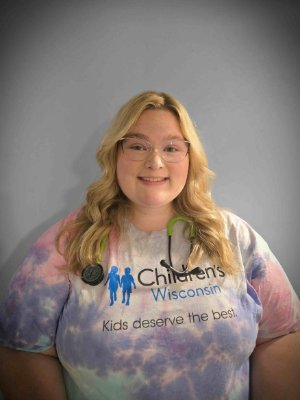
Kaitlyn, Respiratory Therapist Intern at Children's Wisconsin
Children’s Wisconsin’s respiratory therapists practice in our hospitals and clinics ensuring pediatric patients receive the specialized care they need. This includes the tiniest, premature infants whose lungs are not fully developed, caring for children with asthma, and managing devices and equipment to help patients who can’t breathe well on their own.
Last year, Children’s Wisconsin faced a 20% vacancy rate among respiratory therapist positions. Despite the important role respiratory therapists play in patient care, Children’s Wisconsin is not alone amongst hospitals and health systems that face challenges in filling vacant positions. A recent survey of respiratory leaders by the American Association for Respiratory Care showed that 87% believe there is a current, local shortage of respiratory therapists and 84% think a shortage in the future is likely. Reflecting trends in other health care careers, many respiratory therapists are retiring and fewer are entering the workforce.
To help address these challenges and help fill these traditionally hard-to-fill positions, Children’s Wisconsin developed a respiratory therapist internship program. Students enrolled in a respiratory therapy education program can apply to gain professional experience in a paid position at Children’s Wisconsin while they’re in school. Interns help prepare respiratory equipment and supplies, perform support functions, administer medications and provide respiratory care in the hospital under the supervision of a respiratory care practitioner. In addition to obtaining valuable experience working alongside pediatric experts, tuition assistance funds are available for students to help support their continued education.
Prior to beginning her respiratory therapist internship at Children’s Wisconsin last year, Kaitlyn didn’t have health care experience – she didn’t think she’d work with kids at all. Now in her second year in the internship program, Kaitlyn finds her work enjoyable and loves the atmosphere of the hospital where she hopes to work one day. When Kaitlyn began her education at Moraine Park Technical College last year, she began the Children’s Wisconsin respiratory therapist internship program where she got firsthand experience with respiratory care, learning about the flow of care in the hospital and familiarizing herself with the equipment she was reading about in class. Now, she’s participating in clinicals through her schoolwork and helping take care of acute patients. She is shadowing team members who have been very welcoming, take time to answer her questions, and validate that she’s ready and prepared. The internship helps Kaitlyn and her colleagues feel prepared to be successful as future respiratory therapists.
Through this internship program, over the last 5 years, Children’s Wisconsin has hired nearly 20 respiratory therapists after their graduation to help address workforce shortages and promote respiratory therapist career development. Children’s Wisconsin system investments and philanthropic funds help support this internship program. In addition, Children’s Wisconsin respiratory therapists regularly visit middle and high schools to educate students about the profession and participate in job fairs at respiratory college partners to showcase job opportunities. Children’s Wisconsin is committed to providing tools and resources to support trainees in providing kids with high-quality care and achieving their career path goals.
Children’s Wisconsin provides holistic care and services at Trauma Quality of Life Clinic
When a child experiences a traumatic injury, care providers across specialties at Children’s Wisconsin come together to treat the child and provide lifesaving measures in the emergency department and through surgery and hospitalization. The child is connected to any specialty care and physical and occupational therapies they may need, including, but not limited to, Children’s Wisconsin’s mental and behavioral health services, social work and Project Ujima, a hospital-based violence intervention program that focuses on enrolling violently-injured youth and helping them with crisis intervention, support services and connections to resources.
While Children’s Wisconsin clinicians excel in providing lifesaving care, the quality of that child and family’s lives are forever changed – whether due to permanent injury, disability, or mental health impacts and the trauma they’ve endured. The impacts last well beyond the initial treatment of the injury and reverberate through the patient’s entire family.
In 2024, Children’s Wisconsin began a pilot program instituting the Pediatric Trauma Quality of Life (TQOL) Clinic in partnership with the Medical College of Wisconsin. Focusing on recovery, resilience and enhancing quality of life, the TQOL Clinic offers personalized, trauma-informed and multidisciplinary post-injury care for children and their families. After a traumatic injury, a child may have lingering pain and follow-up care needs, experience nightmares or fear for their safety, and may have difficulty returning to their new normal. The list of providers on a child’s care team can quickly grow as they progress on their healing journey, which often includes navigating multiple follow-up appointments. Often, families do not have resources to support them throughout the complicated process of post-injury care.
A dedicated community advisory board of patients, families, care teams and community organizations helped shape TQOL Clinic services to ensure they would meet the real needs of families facing trauma recovery. These experts have key insights on the experiences patients and families face and the disruption that traumatic injuries have on a young patient and the world that surrounds them. Children’s Wisconsin’s TQOL Clinic brings together providers from several specialties together, including surgery, psychology, physical therapy, social work and Project Ujima and 414Life, the adult-focused hospital-based violence intervention program, to one location at the same time. Together, they provide support for the physical, mental and social needs of the child and their family to better coordinate care, services and resources through a convenient and efficient model of care.
Initial patient family surveys indicate 100% of families are satisfied with their care at the TQOL Clinic demonstrating positive attitudes about the multidisciplinary care, compared to the previous standard model. Most caregivers found the ability to see all providers in one visit very convenient, an efficient use of time, and an opportunity to have all of their questions answered. Children’s Wisconsin’s TQOL Clinic makes these services more accessible to patients and families, who are enduring significant life changes and navigating complex dynamics, to help ensure kids and families receive the comprehensive care and support they need.
Children’s Wisconsin programs focused on promoting nutrition, physical activity and healthy habits
Wisconsin Department of Health Services’ data indicates that nearly 20% of Wisconsin children have obesity. Children’s Wisconsin has several programs that promote nutrition, physical activity, health education and resources to ensure kids and their families are healthy and well.
Children’s Wisconsin offers free e-learning resources for educators, parents and children on a variety of topics, including on nutrition and physical education. Children’s Wisconsin’s e-learning content provides fun and interactive lessons, activities and games to support students K-8 in learning how to establish healthy habits, increase physical activity and feel good about their bodies. In 2024, e-learning programs moved to a website-delivery model and have seen more than 12,000 website views on nutrition and physical activity lessons and activities since August 2024. In 2023, Children’s Wisconsin launched the Diabetes Prevention Clinic that works with patients and families to improve health and prevent type 2 diabetes in kids. The team focuses on lifestyle changes that help patients and their families live the happiest and healthiest life possible. Previously, patients with indications of pre-diabetes met with an endocrinologist, yet rarely saw a dietitian. Now, their first visit begins with a joint appointment with the endocrinology provider and dietitian, followed by alternating one‑on‑one check‑ins. Dietitians work with patients and their families providing tailored tools and supports to improve their health, including providing education and strategies around meal habits and snacks, hydration, stress, exercise and more.
Over the last two years caring for approximately 200 patients, none have gone on to develop type 2 diabetes. In addition, Children’s Wisconsin clinicians offer trainings, support and resources to school personnel to support students with diabetes. This includes offering school plan worksheets, school management protocols, assistance with utilizing diabetes technology and how to help support and care for students with diabetes. After 15 months of clinic attendance, one of Children’s Wisconsin’s patients reduced their weight by 7% and dropped their A1c from prediabetic to normal levels. Another patient was seen in clinic for 12 months. They previously had not participated in physical activity, and with Children’s Wisconsin’s physical therapy support, they built a healthy routine for physical activity four times per week. With dietitian support, they implemented a few dietary changes. Over the year, their weight decreased by 12%.
Children’s Wisconsin recently implemented a pilot to integrate dietitians in the Greenfield Pediatrics primary care office. The pilot provides prevention and early intervention opportunities to address nutrition concerns, including healthy eating habits. Children’s Wisconsin Clinical Nutrition utilize a family habits survey to quickly assess family habits around eating and activity. Dietitians are available for scheduled and same-day, preventive visits and provide age-appropriate resources. During 2024, the pilot had nearly 1,000 dietician visits as part of this integrated model, with initial analyses indicating families served saw a 15% average improvement in their family habits.
By offering comprehensive programs that meet kids and families where they are, Children’s Wisconsin is supporting patients with the right care at the right time and the services they really need.