
UW Health, 2025 Community Benefits
UW Health Apprenticeship Programs Help Address Healthcare Workforce Shortages
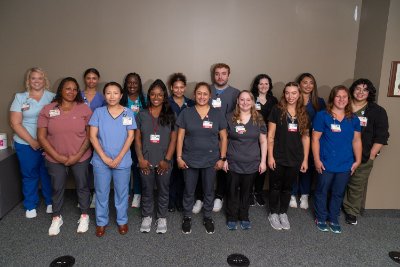
As healthcare demand continues to grow across Wisconsin and the nation, UW Health is tackling one of the sector’s most pressing challenges: workforce shortages. Through innovative apprenticeship programs, UW Health is creating pathways for individuals to enter healthcare careers, gain valuable skills, and help meet the community’s critical staffing needs.
Apprenticeships combine paid on-the-job training with classroom instruction, allowing participants to earn a wage while learning the technical and professional skills required for healthcare roles. UW Health’s programs are designed for a variety of positions, including nursing assistants, medical assistants, laboratory technicians, pharmacy technicians, and other allied health professions. By offering structured training and mentorship, these programs provide an alternative to traditional education pathways, making healthcare careers more accessible to individuals who may face financial or educational barriers.
One of the strengths of UW Health’s approach is its focus on career ladders. Participants can start in an entry-level position and, through additional training and experience, advance into higher-level roles such as registered nurses, respiratory therapists, or clinical specialists. This model not only fills immediate staffing gaps but also creates long-term retention, as employees build meaningful careers within UW Health. By offering mentorship, financial support, and hands-on learning, UW Health helps participants develop both the technical skills and the confidence needed to thrive in healthcare settings.
The impact of these programs extends beyond UW Health’s own workforce. By preparing skilled healthcare workers, the programs help strengthen the broader health system in Wisconsin. Hospitals, clinics, and long-term care facilities benefit from a pipeline of trained professionals who are ready to meet patient needs. In turn, patients receive more timely, high-quality care, helping improve outcomes across the community. In addition to training, UW Health partners with technical colleges, workforce development boards, and community organizations to align apprenticeship programs with local labor market needs. This collaboration ensures that program participants acquire skills that are in high demand, while employers gain a reliable pipeline of qualified staff.
Early results show promising outcomes: graduates of UW Health’s apprenticeship programs report high employment rates and satisfaction with their training, while UW Health has successfully filled critical roles that were previously difficult to staff. These successes illustrate how apprenticeships can be a strategic solution to workforce shortages, offering both economic opportunity and improved healthcare access.
As the healthcare industry continues to evolve, UW Health’s apprenticeship programs represent an innovative, scalable approach to workforce development. By providing education, training, and career pathways, UW Health not only addresses immediate staffing needs but also invests in the future of healthcare, ensuring communities across Wisconsin have access to skilled, compassionate professionals for years to come.
Apprenticeships combine paid on-the-job training with classroom instruction, allowing participants to earn a wage while learning the technical and professional skills required for healthcare roles. UW Health’s programs are designed for a variety of positions, including nursing assistants, medical assistants, laboratory technicians, pharmacy technicians, and other allied health professions. By offering structured training and mentorship, these programs provide an alternative to traditional education pathways, making healthcare careers more accessible to individuals who may face financial or educational barriers.
One of the strengths of UW Health’s approach is its focus on career ladders. Participants can start in an entry-level position and, through additional training and experience, advance into higher-level roles such as registered nurses, respiratory therapists, or clinical specialists. This model not only fills immediate staffing gaps but also creates long-term retention, as employees build meaningful careers within UW Health. By offering mentorship, financial support, and hands-on learning, UW Health helps participants develop both the technical skills and the confidence needed to thrive in healthcare settings.
The impact of these programs extends beyond UW Health’s own workforce. By preparing skilled healthcare workers, the programs help strengthen the broader health system in Wisconsin. Hospitals, clinics, and long-term care facilities benefit from a pipeline of trained professionals who are ready to meet patient needs. In turn, patients receive more timely, high-quality care, helping improve outcomes across the community. In addition to training, UW Health partners with technical colleges, workforce development boards, and community organizations to align apprenticeship programs with local labor market needs. This collaboration ensures that program participants acquire skills that are in high demand, while employers gain a reliable pipeline of qualified staff.
Early results show promising outcomes: graduates of UW Health’s apprenticeship programs report high employment rates and satisfaction with their training, while UW Health has successfully filled critical roles that were previously difficult to staff. These successes illustrate how apprenticeships can be a strategic solution to workforce shortages, offering both economic opportunity and improved healthcare access.
As the healthcare industry continues to evolve, UW Health’s apprenticeship programs represent an innovative, scalable approach to workforce development. By providing education, training, and career pathways, UW Health not only addresses immediate staffing needs but also invests in the future of healthcare, ensuring communities across Wisconsin have access to skilled, compassionate professionals for years to come.