
Click here to view past issues
IN THIS ISSUE
- WHA CEO Leaders Discuss the Future of Rural Health Care at Wisconsin Rural Health Conference
- That’s a Wrap: 2026 WHA Wisconsin Rural Health Conference Experiences Continued Attendance Growth
- Rural Conference Keynote Offers Insight into Multi-Generational Workforce
- Rural Health Conference: A Panel on Advancing Health Workforce Well-Being Across Hospital Settings
- Rural Conference Closer Brings Energy, Humor and Insight to Group
- Rural Health Transformation Grant Opportunities Now Open for Wisconsin Hospitals, Rural Health Clinics and Other Providers
- 2026 WHA Health Care Leadership Academy Graduates Ten New Leaders
- Ten Quality Improvement Leaders Complete Wisconsin Quality Residency Program
EDUCATION EVENTS
Oct. 20, 2026
WIpop Virtual Training: Session 1Oct. 20, 2026
WHA 2026 Wisconsin Health Care Workforce Webinar SeriesOct. 20, 2026
Risk Management FundamentalsClick here to view education event calendar
View more issues of The Valued Voice
Sign Up for WHA's Newsletter


WHA CEO Leaders Discuss the Future of Rural Health Care at Wisconsin Rural Health Conference
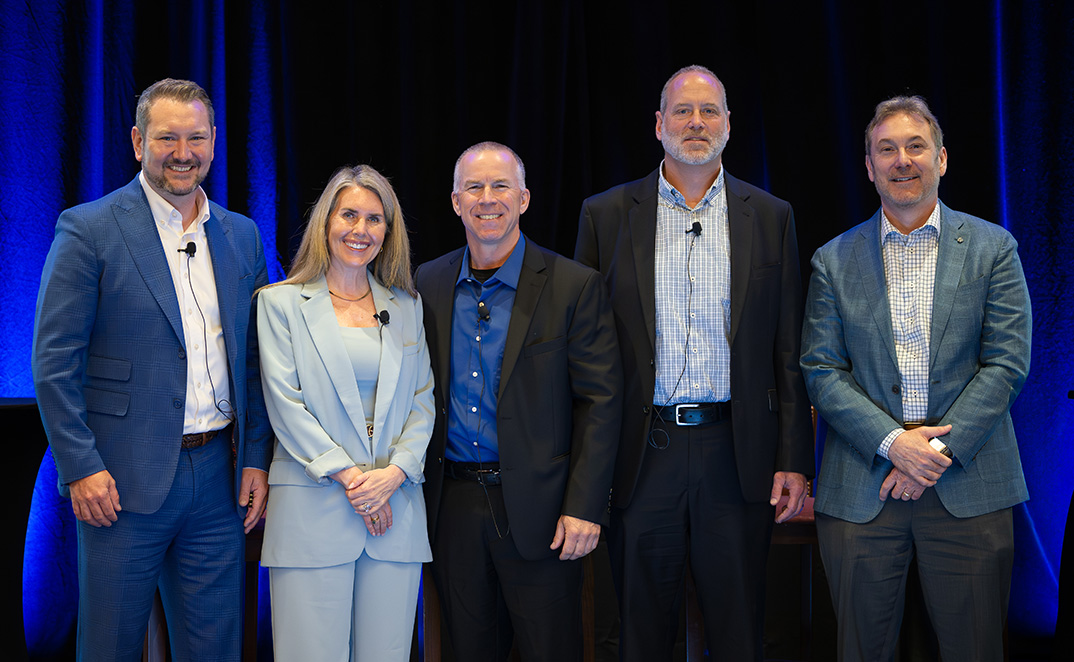 L to R: Kyle O’Brien, Heather Schimmers, Dan Rohrback, John Russell, Matt HeywoodRural hospital and health system leaders from across Wisconsin joined WHA President and CEO Kyle O’Brien for a candid conversation on the future of rural health care during the Wisconsin Rural Health Conference on June 10 at The Osthoff Resort in Elkhart Lake.
The panel, titled Rural Health Care Today and Tomorrow: A Conversation with WHA CEO Leaders, featured Aspirus Health President and CEO Matt Heywood; Southwest Health President and Dan Rohrbach; Prairie Ridge Health President and CEO John Russell; and Emplify Health President Heather Schimmers.
Telling Wisconsin’s Health Care Story
O’Brien began the conversation by asking what sets Wisconsin apart as a state known nationally for high-quality health care. The question set up a broader discussion about how Wisconsin’s health care value story is often misunderstood when outside groups focus narrowly on price without looking at utilization, care coordination, outcomes and total cost of care.
Matt Heywood said one of Wisconsin’s differentiators is the extent to which care delivery is integrated across hospitals, clinics, physicians and other care settings.
“When you really look at it, we are one of the most integrated states in the country,” Heywood said. “Very few states are as integrated as we are consistently across the state.”
Heywood said that integration matters because it allows health care providers to better coordinate care, manage utilization and support patients over time.
“That integration, I believe, gives you the ability to manage the cost of care better, especially if the patient stays in that network over a two- to three-year period of time,” Heywood said.
John Russell added that Wisconsin’s strength is not only high quality, but consistent high quality across communities.
“The thing about Wisconsin health care that is different… is consistent high-quality health care,” Russell said. “I would walk through one of your EDs or send a family member to any of these organizations and know I’m going to receive good care. That is not the case in a lot of other states.”
O’Brien emphasized that hospital leaders must continue telling that story in their communities and with policymakers, especially when critics question Wisconsin’s high-quality health care.
Balancing Access, Innovation and Sustainability
The discussion then turned to the opportunities and challenges facing rural health care. Schimmers said rural providers must focus on preserving access, maintaining high-quality care and building sustainable models for the future.
“We have to ask ourselves how we continually act in a way that we can preserve access, that we can maintain our high-quality health care in the state,” Schimmers said. “Sustainability—we have to be here for the people that need us. These communities are depending so greatly on us.”
Schimmers said one of the greatest opportunities is using scale, partnerships and new models of care to support rural communities without losing what makes local health care special. She said, “That is a craft and that is an art.”
She pointed to virtual care, remote monitoring, AI-enabled workforce tools and expanded care teams as examples of ways rural providers can think differently about how care is delivered.
Schimmers also acknowledged that the challenges facing rural providers are significant. Workforce shortages, financial pressures, regulatory complexity and changing community expectations are all putting pressure on rural hospitals and health systems. In many communities, she said, demand for services is changing at the same time resources are constrained, making it more difficult to meet every need locally.
“The challenges, of course, are so real,” Schimmers said. “Workforce shortages in our rural communities are very real, and it’s going to be something we’re going to continue to have to struggle with.”
She also pointed to financial pressure and regulatory complexity as growing concerns.
“Our financial pressures are incredibly real,” Schimmers said. “Regulatory complexities change on a dime every single day, and trying to keep up with that is unlike anything I’ve experienced in my health care career.”
Despite the challenges, Schimmers said she remains optimistic because rural health care leaders have a long history of problem-solving and innovation.
“What gives me the most optimism about rural health care leaders is that we are so resilient and we are so innovative, and we’ve been doing this for 100 years,” Schimmers said. “We know how to solve these problems.”
That resilience was echoed by Russell, who said Wisconsin hospitals have a record of adapting to change.
“Wisconsin hospitals are very nimble, innovative and resilient compared to many other states,” Russell said. “Historically, Wisconsin’s gotten it done. And I think we’ll do that again.”
Preparing for Change Before It Arrives
Panelists also discussed how rural health care leaders are planning through uncertainty. Heywood said the pace of change can feel overwhelming, but leaders cannot let uncertainty prevent long-term planning.
“A lot of people think it’s too chaotic to be able to plan effectively. I disagree,” Heywood said. “I believe that it’s got to be planned through, and that there is a way to plan through the ambiguity and the amount of change that we’re having.”
Rohrbach put it simply, “Be ready so you don’t have to get ready…You always have to be ready for the chaos, because if you wait for it to happen…it’s too late.”
Facing Rural Health Care Vulnerabilities
Rohrbach also spoke candidly about the vulnerabilities rural hospitals face, including cybersecurity threats and single points of failure. He said IT security is one of the issues that keeps him up at night.
“Right now… the big thing is IT security,” Rohrbach said. “And if you’re sitting in this room and saying, ‘I don’t lose sleep over that,’ I don’t know what solution you have, because I’m terrified of that.”
He said rural hospitals must also understand where they may be vulnerable because of reliance on one person, one vendor or one service line.
“In small organizations, we all have single points of failure,” Rohrbach said. “A single point of failure is also a system or a vendor you use.”
At the same time, Rohrbach said rural health care offers a unique opportunity to make decisions, work closely with teams and see the impact quickly.
“In rural health care, it’s so much fun,” Rohrbach said. “You come in, you make a decision, you work with your team, and you see the results the next day.”
Advocacy as a Leadership Responsibility
Advocacy was also a major theme of the conversation. Russell reflected on the role public policy has played in stabilizing rural hospitals over time and stated, “We cannot take our foot off the gas on advocacy. We’ve got to tell our story.”
Schimmers said advocacy is not separate from the work of health care leadership—it is part of the responsibility leaders have to their patients and communities.
“Advocacy actually is the most important role that we as health care leaders have,” Schimmers said. “It is an extension of our responsibility to our patients and our communities.”
She added that WHA helps align hospital voices and strengthen the collective message.
“It is our responsibility to share those stories, but we are so lucky for WHA,” Schimmers said. “I think it aligns our voice. I think we are far more powerful when we come forward as a group.”
Rohrbach encouraged hospital leaders to see advocacy as education.
“You don’t have to be a politician,” Rohrbach said. “You just have to educate the politicians.”
Russell added that the most effective advocacy is rooted in relationships.
“Advocacy is personal. Health care is personal,” Russell said. “Take time to develop those relationships, and they will pay off for you.”
Building Sustainable Organizations for the Future
The panel also addressed growth, sustainability, culture, technology and partnerships. On growth, Rohrbach said rural hospitals must be thoughtful about what services they add and how they sustain them.
“We have to look at it from a business standpoint and also a clinical standpoint,” Rohrbach said. “What’s our community need? That’s important. That’s our core services.
“For rural hospitals,” he added, “sustainability requires balancing essential community services with the financial realities needed to continue supporting access to care.”
On culture, Russell emphasized that people remain at the center of every strategy.
“Culture. It’s always culture,” Russell said. “Spend time on your culture. Those team members matter.”
Heywood spoke to culture as increasingly important as organizations navigate division, disruption and change.
“Culture is becoming more important than ever,” Heywood said. “It is holding the cohesion of civility, collaboration, not being political, having the ability to work together as a team.”
When discussing technology and AI, Heywood cautioned that technology should be tied to clear organizational needs.
“We’re not looking for technology to just randomly put in,” Heywood said. “We’re looking at the problems we’re trying to solve.”
Schimmers said successful technology adoption requires more than implementing a new tool—it requires building an organizational mindset that can adapt.
“It’s not so much the actual piece of technology or the system that you’re putting in place,” Schimmers said. “It’s building a mindset to be able to accept it and to be able to move quickly and be agile in how you use the technology.”
Remaining Focused on Patients and Communities
The conversation closed with a clear message: Wisconsin’s rural hospitals face real challenges, but they are led by people who know their communities, understand the stakes and are committed to shaping the future of health care.
“We know our communities, and we know what they need and what they deserve,” Schimmers said. “The future absolutely belongs to organizations that are willing to think differently, collaborate far more intentionally… and remain relentlessly focused on our patients and our communities.”
WHA CEO Leaders Discuss the Future of Rural Health Care at Wisconsin Rural Health Conference
L to R: Kyle O’Brien, Heather Schimmers, Dan Rohrback, John Russell, Matt HeywoodRural hospital and health system leaders from across Wisconsin joined WHA President and CEO Kyle O’Brien for a candid conversation on the future of rural health care during the Wisconsin Rural Health Conference on June 10 at The Osthoff Resort in Elkhart Lake.
The panel, titled Rural Health Care Today and Tomorrow: A Conversation with WHA CEO Leaders, featured Aspirus Health President and CEO Matt Heywood; Southwest Health President and Dan Rohrbach; Prairie Ridge Health President and CEO John Russell; and Emplify Health President Heather Schimmers.
Telling Wisconsin’s Health Care Story
O’Brien began the conversation by asking what sets Wisconsin apart as a state known nationally for high-quality health care. The question set up a broader discussion about how Wisconsin’s health care value story is often misunderstood when outside groups focus narrowly on price without looking at utilization, care coordination, outcomes and total cost of care.
Matt Heywood said one of Wisconsin’s differentiators is the extent to which care delivery is integrated across hospitals, clinics, physicians and other care settings.
“When you really look at it, we are one of the most integrated states in the country,” Heywood said. “Very few states are as integrated as we are consistently across the state.”
Heywood said that integration matters because it allows health care providers to better coordinate care, manage utilization and support patients over time.
“That integration, I believe, gives you the ability to manage the cost of care better, especially if the patient stays in that network over a two- to three-year period of time,” Heywood said.
John Russell added that Wisconsin’s strength is not only high quality, but consistent high quality across communities.
“The thing about Wisconsin health care that is different… is consistent high-quality health care,” Russell said. “I would walk through one of your EDs or send a family member to any of these organizations and know I’m going to receive good care. That is not the case in a lot of other states.”
O’Brien emphasized that hospital leaders must continue telling that story in their communities and with policymakers, especially when critics question Wisconsin’s high-quality health care.
Balancing Access, Innovation and Sustainability
The discussion then turned to the opportunities and challenges facing rural health care. Schimmers said rural providers must focus on preserving access, maintaining high-quality care and building sustainable models for the future.
“We have to ask ourselves how we continually act in a way that we can preserve access, that we can maintain our high-quality health care in the state,” Schimmers said. “Sustainability—we have to be here for the people that need us. These communities are depending so greatly on us.”
Schimmers said one of the greatest opportunities is using scale, partnerships and new models of care to support rural communities without losing what makes local health care special. She said, “That is a craft and that is an art.”
She pointed to virtual care, remote monitoring, AI-enabled workforce tools and expanded care teams as examples of ways rural providers can think differently about how care is delivered.
Schimmers also acknowledged that the challenges facing rural providers are significant. Workforce shortages, financial pressures, regulatory complexity and changing community expectations are all putting pressure on rural hospitals and health systems. In many communities, she said, demand for services is changing at the same time resources are constrained, making it more difficult to meet every need locally.
“The challenges, of course, are so real,” Schimmers said. “Workforce shortages in our rural communities are very real, and it’s going to be something we’re going to continue to have to struggle with.”
She also pointed to financial pressure and regulatory complexity as growing concerns.
“Our financial pressures are incredibly real,” Schimmers said. “Regulatory complexities change on a dime every single day, and trying to keep up with that is unlike anything I’ve experienced in my health care career.”
Despite the challenges, Schimmers said she remains optimistic because rural health care leaders have a long history of problem-solving and innovation.
“What gives me the most optimism about rural health care leaders is that we are so resilient and we are so innovative, and we’ve been doing this for 100 years,” Schimmers said. “We know how to solve these problems.”
That resilience was echoed by Russell, who said Wisconsin hospitals have a record of adapting to change.
“Wisconsin hospitals are very nimble, innovative and resilient compared to many other states,” Russell said. “Historically, Wisconsin’s gotten it done. And I think we’ll do that again.”
Preparing for Change Before It Arrives
Panelists also discussed how rural health care leaders are planning through uncertainty. Heywood said the pace of change can feel overwhelming, but leaders cannot let uncertainty prevent long-term planning.
“A lot of people think it’s too chaotic to be able to plan effectively. I disagree,” Heywood said. “I believe that it’s got to be planned through, and that there is a way to plan through the ambiguity and the amount of change that we’re having.”
Rohrbach put it simply, “Be ready so you don’t have to get ready…You always have to be ready for the chaos, because if you wait for it to happen…it’s too late.”
Facing Rural Health Care Vulnerabilities
Rohrbach also spoke candidly about the vulnerabilities rural hospitals face, including cybersecurity threats and single points of failure. He said IT security is one of the issues that keeps him up at night.
“Right now… the big thing is IT security,” Rohrbach said. “And if you’re sitting in this room and saying, ‘I don’t lose sleep over that,’ I don’t know what solution you have, because I’m terrified of that.”
He said rural hospitals must also understand where they may be vulnerable because of reliance on one person, one vendor or one service line.
“In small organizations, we all have single points of failure,” Rohrbach said. “A single point of failure is also a system or a vendor you use.”
At the same time, Rohrbach said rural health care offers a unique opportunity to make decisions, work closely with teams and see the impact quickly.
“In rural health care, it’s so much fun,” Rohrbach said. “You come in, you make a decision, you work with your team, and you see the results the next day.”
Advocacy as a Leadership Responsibility
Advocacy was also a major theme of the conversation. Russell reflected on the role public policy has played in stabilizing rural hospitals over time and stated, “We cannot take our foot off the gas on advocacy. We’ve got to tell our story.”
Schimmers said advocacy is not separate from the work of health care leadership—it is part of the responsibility leaders have to their patients and communities.
“Advocacy actually is the most important role that we as health care leaders have,” Schimmers said. “It is an extension of our responsibility to our patients and our communities.”
She added that WHA helps align hospital voices and strengthen the collective message.
“It is our responsibility to share those stories, but we are so lucky for WHA,” Schimmers said. “I think it aligns our voice. I think we are far more powerful when we come forward as a group.”
Rohrbach encouraged hospital leaders to see advocacy as education.
“You don’t have to be a politician,” Rohrbach said. “You just have to educate the politicians.”
Russell added that the most effective advocacy is rooted in relationships.
“Advocacy is personal. Health care is personal,” Russell said. “Take time to develop those relationships, and they will pay off for you.”
Building Sustainable Organizations for the Future
The panel also addressed growth, sustainability, culture, technology and partnerships. On growth, Rohrbach said rural hospitals must be thoughtful about what services they add and how they sustain them.
“We have to look at it from a business standpoint and also a clinical standpoint,” Rohrbach said. “What’s our community need? That’s important. That’s our core services.
“For rural hospitals,” he added, “sustainability requires balancing essential community services with the financial realities needed to continue supporting access to care.”
On culture, Russell emphasized that people remain at the center of every strategy.
“Culture. It’s always culture,” Russell said. “Spend time on your culture. Those team members matter.”
Heywood spoke to culture as increasingly important as organizations navigate division, disruption and change.
“Culture is becoming more important than ever,” Heywood said. “It is holding the cohesion of civility, collaboration, not being political, having the ability to work together as a team.”
When discussing technology and AI, Heywood cautioned that technology should be tied to clear organizational needs.
“We’re not looking for technology to just randomly put in,” Heywood said. “We’re looking at the problems we’re trying to solve.”
Schimmers said successful technology adoption requires more than implementing a new tool—it requires building an organizational mindset that can adapt.
“It’s not so much the actual piece of technology or the system that you’re putting in place,” Schimmers said. “It’s building a mindset to be able to accept it and to be able to move quickly and be agile in how you use the technology.”
Remaining Focused on Patients and Communities
The conversation closed with a clear message: Wisconsin’s rural hospitals face real challenges, but they are led by people who know their communities, understand the stakes and are committed to shaping the future of health care.
“We know our communities, and we know what they need and what they deserve,” Schimmers said. “The future absolutely belongs to organizations that are willing to think differently, collaborate far more intentionally… and remain relentlessly focused on our patients and our communities.”
IN THIS ISSUE
- WHA CEO Leaders Discuss the Future of Rural Health Care at Wisconsin Rural Health Conference
- That’s a Wrap: 2026 WHA Wisconsin Rural Health Conference Experiences Continued Attendance Growth
- Rural Conference Keynote Offers Insight into Multi-Generational Workforce
- Rural Health Conference: A Panel on Advancing Health Workforce Well-Being Across Hospital Settings
- Rural Conference Closer Brings Energy, Humor and Insight to Group
- Rural Health Transformation Grant Opportunities Now Open for Wisconsin Hospitals, Rural Health Clinics and Other Providers
- 2026 WHA Health Care Leadership Academy Graduates Ten New Leaders
- Ten Quality Improvement Leaders Complete Wisconsin Quality Residency Program
EDUCATION EVENTS
Oct. 20, 2026
WIpop Virtual Training: Session 1Oct. 20, 2026
WHA 2026 Wisconsin Health Care Workforce Webinar SeriesOct. 20, 2026
Risk Management Fundamentals