
Click here to view past issues
IN THIS ISSUE
- WHA and Hospital Leaders Urge Senate Regulatory Reform Committee to Reject New Duplicative State Regulations on Hospital Price Reporting
- Advocacy Day 2026 Registration Surpasses 400 Registrants with 7 Weeks to Event
- Wisconsin Hospitals State PAC & Conduit Meets 2025 Fundraising Goal
- Applications Open for Fifth Round of Medicare-Funded GME Residency Slots
- Fast Facts from the WHA Information Center: Winter Sports Injuries
EDUCATION EVENTS
Oct. 15, 2026
Substance Use Disorders Management Boot CampOct. 15, 2026
Culture College – Breakthrough Strategies for Creating and Sustaining a Magnetic CultureOct. 20, 2026
WIpop Virtual Training: Session 1Click here to view education event calendar
View more issues of The Valued Voice
Sign Up for WHA's Newsletter


Fast Facts from the WHA Information Center: Winter Sports Injuries
 Winter in Wisconsin allows many opportunities to get outdoors and be active. While enjoying the wonders that this time of year has to offer, it’s important to be aware of the potential dangers that come with winter activities. In 2022, the U.S. Consumer Product Safety Commission reported roughly 124,700 people treated at hospitals for winter sports injuries. The sports with the most injuries were downhill skiing and snowboarding. Other common activities that have a high number of injuries are snowmobiling, ice hockey, sledding and ice skating. The injuries commonly resulting from winter sport activities include sprains, dislocations and fractures.
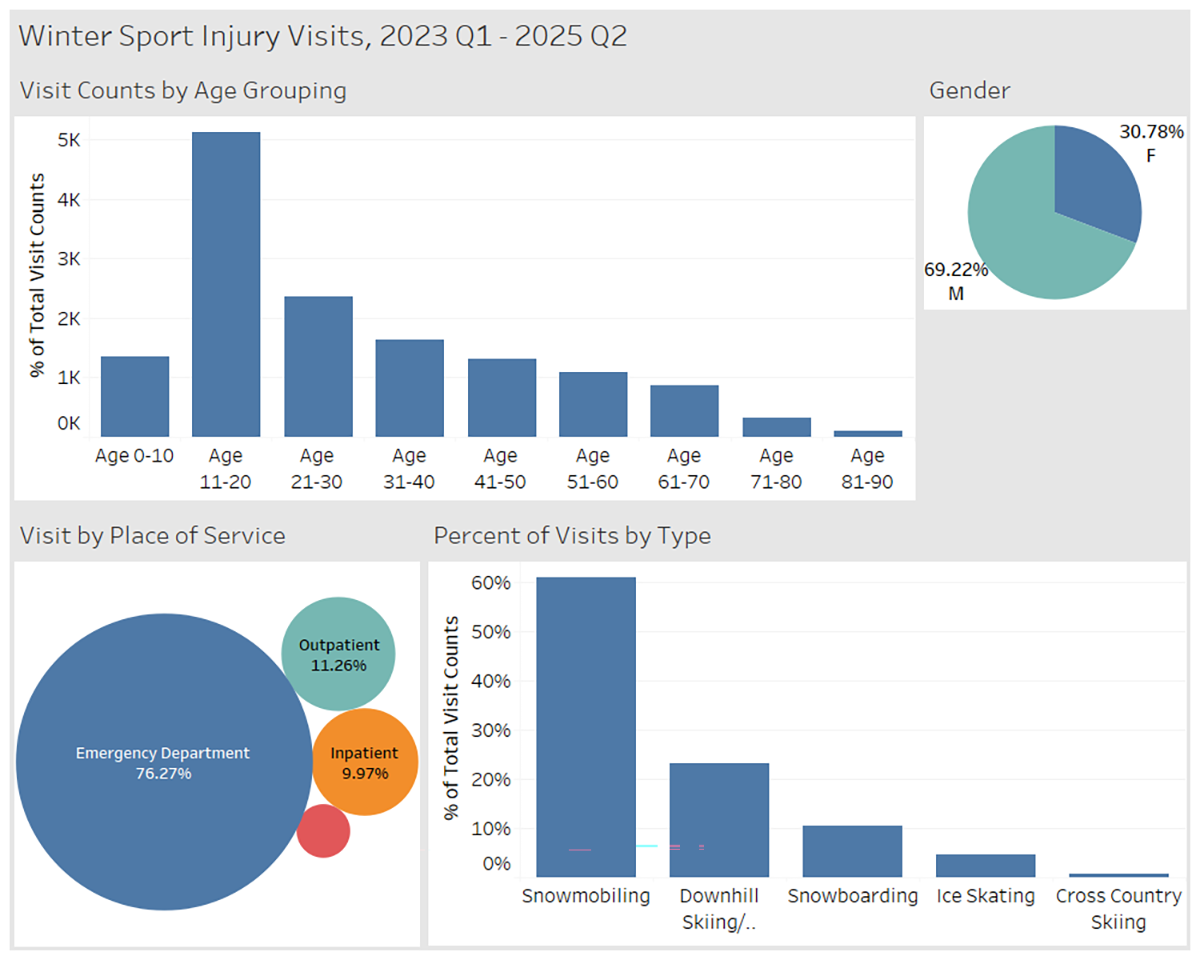
The WHA Information Center analyzed claims from January 2023 through July 2025 to see how winter sport injuries are impacting Wisconsin hospitals and patients. Snowmobiling accidents had the highest number of visits to hospitals, followed by downhill skiing and snowboarding. Males were seen more frequently and accounted for roughly 69% of all visits to a hospital related to a winter sport injury. In total, emergency departments saw 76% of patients visiting the hospital for a winter sport injury. The average age of a patient being seen at a hospital for a winter activity injury was 29 years of age.
The following are some tips on how to prevent injuries from winter activities from the American Academy of Orthopedic Surgeons:
- Never participate alone in a winter sport.
- Warm up thoroughly before playing or participating. Cold muscles, tendons and ligaments are more vulnerable to injury.
- Wear appropriate protective gear, including goggles, helmets, gloves and padding.
- Check that equipment is working properly prior to use.
- Take lessons from a qualified instructor, especially in sports like skiing and snowboarding. Learning how to fall correctly and safely can reduce the risk of injury.
- Pay attention to warnings about upcoming storms and severe drops in temperature.
Fast Facts from the WHA Information Center: Winter Sports Injuries
Winter in Wisconsin allows many opportunities to get outdoors and be active. While enjoying the wonders that this time of year has to offer, it’s important to be aware of the potential dangers that come with winter activities. In 2022, the U.S. Consumer Product Safety Commission reported roughly 124,700 people treated at hospitals for winter sports injuries. The sports with the most injuries were downhill skiing and snowboarding. Other common activities that have a high number of injuries are snowmobiling, ice hockey, sledding and ice skating. The injuries commonly resulting from winter sport activities include sprains, dislocations and fractures.
The WHA Information Center analyzed claims from January 2023 through July 2025 to see how winter sport injuries are impacting Wisconsin hospitals and patients. Snowmobiling accidents had the highest number of visits to hospitals, followed by downhill skiing and snowboarding. Males were seen more frequently and accounted for roughly 69% of all visits to a hospital related to a winter sport injury. In total, emergency departments saw 76% of patients visiting the hospital for a winter sport injury. The average age of a patient being seen at a hospital for a winter activity injury was 29 years of age.
The following are some tips on how to prevent injuries from winter activities from the American Academy of Orthopedic Surgeons:
- Never participate alone in a winter sport.
- Warm up thoroughly before playing or participating. Cold muscles, tendons and ligaments are more vulnerable to injury.
- Wear appropriate protective gear, including goggles, helmets, gloves and padding.
- Check that equipment is working properly prior to use.
- Take lessons from a qualified instructor, especially in sports like skiing and snowboarding. Learning how to fall correctly and safely can reduce the risk of injury.
- Pay attention to warnings about upcoming storms and severe drops in temperature.
IN THIS ISSUE
- WHA and Hospital Leaders Urge Senate Regulatory Reform Committee to Reject New Duplicative State Regulations on Hospital Price Reporting
- Advocacy Day 2026 Registration Surpasses 400 Registrants with 7 Weeks to Event
- Wisconsin Hospitals State PAC & Conduit Meets 2025 Fundraising Goal
- Applications Open for Fifth Round of Medicare-Funded GME Residency Slots
- Fast Facts from the WHA Information Center: Winter Sports Injuries
EDUCATION EVENTS
Oct. 15, 2026
Substance Use Disorders Management Boot CampOct. 15, 2026
Culture College – Breakthrough Strategies for Creating and Sustaining a Magnetic CultureOct. 20, 2026
WIpop Virtual Training: Session 1