
Click here to view past issues
IN THIS ISSUE
- “It’s Not a Spectator Sport”
- Bipartisan Leaders Tackle Budget, Medicaid and Workforce at Advocacy Day
- WHA's 2026 Health Care Quality Showcase in the Capitol Rotunda
- WHA Makes End-of-Session Push to Move Next-of-Kin Across the Finish Line
- WHA’s Zenk Joins Milwaukee Workforce Summit Panel
- Last Week to Register for WHA’s Physician Leadership Development Conference
- Caring For Wisconsin Caregivers
- Help Shape a New Emergency Department Peer Support Toolkit – 2-Minute Survey
- Register for Substance Use Disorders Management Boot Camp
EDUCATION EVENTS
Oct. 15, 2026
Substance Use Disorders Management Boot CampOct. 15, 2026
Culture College – Breakthrough Strategies for Creating and Sustaining a Magnetic CultureOct. 20, 2026
WIpop Virtual Training: Session 1Click here to view education event calendar
View more issues of The Valued Voice
Sign Up for WHA's Newsletter


“It’s Not a Spectator Sport”
Advocacy Day Keynote speaker Jonathan Martin urges WHA advocates to build relationships, show up and engage in a political era defined by division and digital disruption
At WHA’s 2026 Advocacy Day, attendees heard from POLITICO Politics Bureau Chief and Senior Political Columnist Jonathan Martin in a wide-ranging, fireside chat with WHA President and CEO Kyle O’Brien.
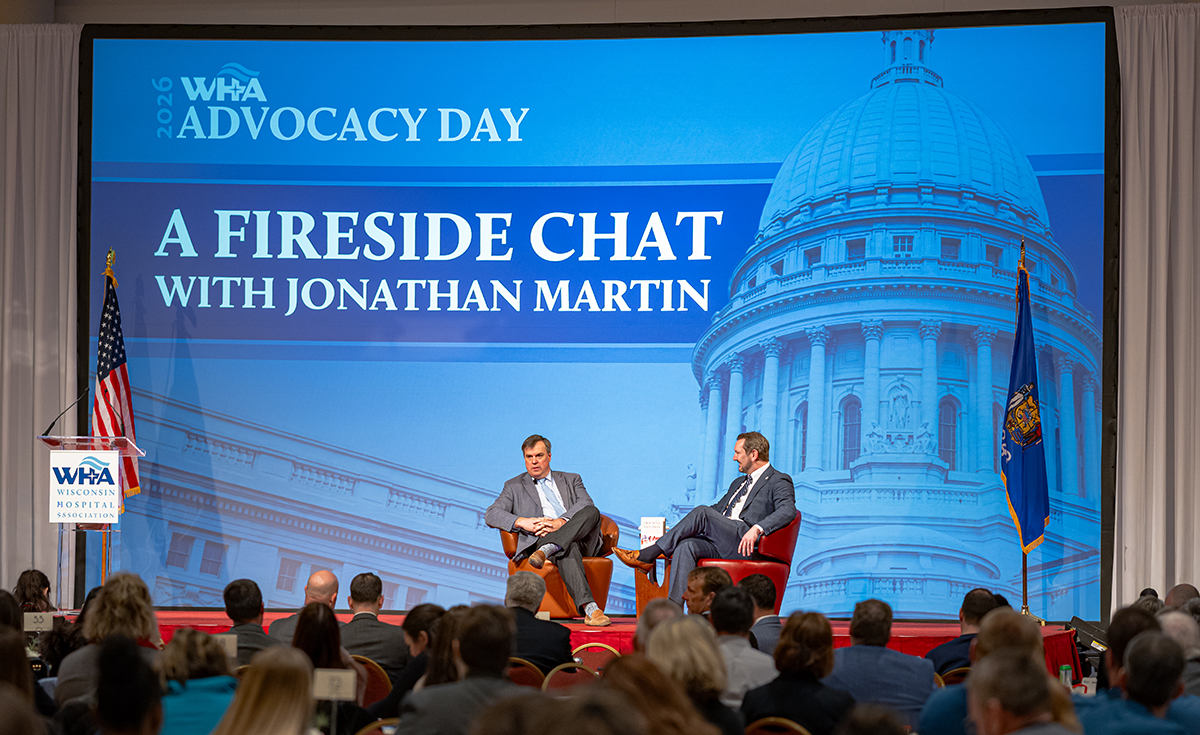 Jonathan Martin and Kyle O’Brien
The discussion—held just hours after the President’s State of the Union address—offered a candid look at the national political landscape and why Wisconsin remains central to it.
State of the Union Reaction
Reflecting on the President’s address the night before, Martin framed the moment as one shaped less by a single speech and more by structural forces transforming American politics.
“I think the speech is sort of suited for an earlier TV era, and we're obviously now in a digital era,” Martin said. In today’s environment, he noted, high-profile political events often become “a spectacle” rather than defining policy moments.
While the president aimed to highlight economic progress, Martin argued the political challenge remains persistent and familiar: “The facts on the ground suggest that people are still paying too much for goods. And it's hard to get around that reality.” He described cost of living as the “central challenge” heading into the midterms.
Negative Partisanship
Looking toward 2026 and beyond, Martin described modern politics as driven increasingly by “negative partisanship.”
“There’s a political science term for it… negative partisanship,” he explained. “People are more motivated by what they're against than what they're for.”
That dynamic, he argued, continues to shape turnout. Donald Trump, in particular, remains a uniquely powerful motivator on both sides of the political spectrum. “Trump is the best gift Democrats have had in off-year elections because he drives out their voters like nothing else.”
For Republicans, the challenge becomes mobilizing voters when Trump is not at the top of the ticket. “How do Republicans get their Trump voters out when he himself is not on top of the ticket? It’s really darn hard.”
Why Wisconsin is Different
Martin reserved special attention for Wisconsin, calling it one of the few states that still defies strict partisan sorting.
“You guys elect Ron Johnson and Tammy Baldwin in the same damn state,” he said. “You can’t make this up.”
He described a “great duality” in Wisconsin politics, crediting a tradition of civic engagement and informed voters who “pick the individual as much as they do the party.” While much of the country has become “team red or team blue,” Wisconsin voters still show a willingness to split tickets—a rarity in today’s polarized environment.
“Politics has become much more of a tribal question,” he said, with less ticket splitting nationally. “And I think that’s what does make Wisconsin still a unique place.”
Discussing Gov. Tony Evers’ tenure working with a divided government, Martin emphasized authenticity as a political asset.
“What sells today in American politics?” he asked. “Love him or hate him, you can’t say [Trump] is inauthentic… And boy, nobody would put Tony Evers and Donald Trump in the same sentence until now. But what do they have in common? They’re the real deal, the genuine article.”
The “Fish Fry Test”
When asked how a presidential candidate should approach Wisconsin voters, Martin offered a simple litmus test:
“Can you envision this candidate on a Friday night going to a Knights of Columbus fish fry in La Crosse and working the crowd and being comfortable?”
If the answer is yes, he said, “that’s going to be a really competitive candidate for president.”
Ultimately, he argued, modern campaigns are less about policy white papers and more about perception. “As the kids say, it’s more vibes.”
Technology and the Future of Democracy
Stepping back from the daily political churn, Martin described a larger force shaping the era: technology.
“The biggest driver in American politics… is this,” he said, holding up his cell phone. The convergence of smartphones and social media algorithms, he argued, has transformed not just politics, but American life itself.
“Politics has become like sand at the beach. It gets in everything, and it’s unavoidable.”
He pointed to growing divisions even within families, noting that Americans are now more likely to object to a child marrying someone of a different political party than of a different faith.
Looking ahead, Martin warned that artificial intelligence may present an even greater challenge than social media algorithms. “In three or four years, we’re not going to be able to tell what’s what,” he said of AI-generated content. “How we sustain a democracy without shared truths and shared facts is going to be a profound challenge.”
A Call to Engagement
Martin closed on a note that resonated strongly with the 1,100 advocates gathered in Madison.
“People complain all the time about the state of American politics… and what I say is it’s not a spectator sport,” he said. “You don’t like it, you can do something about it. Get involved… The only way we’re going to fix the problems we have now is with good people getting involved.”
For hospital leaders preparing to meet with lawmakers at the Capitol, the message was clear: relationships, authenticity and sustained engagement still matter—perhaps more than ever.
“It’s Not a Spectator Sport”
Advocacy Day Keynote speaker Jonathan Martin urges WHA advocates to build relationships, show up and engage in a political era defined by division and digital disruption
At WHA’s 2026 Advocacy Day, attendees heard from POLITICO Politics Bureau Chief and Senior Political Columnist Jonathan Martin in a wide-ranging, fireside chat with WHA President and CEO Kyle O’Brien.
Jonathan Martin and Kyle O’Brien
The discussion—held just hours after the President’s State of the Union address—offered a candid look at the national political landscape and why Wisconsin remains central to it.
State of the Union Reaction
Reflecting on the President’s address the night before, Martin framed the moment as one shaped less by a single speech and more by structural forces transforming American politics.
“I think the speech is sort of suited for an earlier TV era, and we're obviously now in a digital era,” Martin said. In today’s environment, he noted, high-profile political events often become “a spectacle” rather than defining policy moments.
While the president aimed to highlight economic progress, Martin argued the political challenge remains persistent and familiar: “The facts on the ground suggest that people are still paying too much for goods. And it's hard to get around that reality.” He described cost of living as the “central challenge” heading into the midterms.
Negative Partisanship
Looking toward 2026 and beyond, Martin described modern politics as driven increasingly by “negative partisanship.”
“There’s a political science term for it… negative partisanship,” he explained. “People are more motivated by what they're against than what they're for.”
That dynamic, he argued, continues to shape turnout. Donald Trump, in particular, remains a uniquely powerful motivator on both sides of the political spectrum. “Trump is the best gift Democrats have had in off-year elections because he drives out their voters like nothing else.”
For Republicans, the challenge becomes mobilizing voters when Trump is not at the top of the ticket. “How do Republicans get their Trump voters out when he himself is not on top of the ticket? It’s really darn hard.”
Why Wisconsin is Different
Martin reserved special attention for Wisconsin, calling it one of the few states that still defies strict partisan sorting.
“You guys elect Ron Johnson and Tammy Baldwin in the same damn state,” he said. “You can’t make this up.”
He described a “great duality” in Wisconsin politics, crediting a tradition of civic engagement and informed voters who “pick the individual as much as they do the party.” While much of the country has become “team red or team blue,” Wisconsin voters still show a willingness to split tickets—a rarity in today’s polarized environment.
“Politics has become much more of a tribal question,” he said, with less ticket splitting nationally. “And I think that’s what does make Wisconsin still a unique place.”
Discussing Gov. Tony Evers’ tenure working with a divided government, Martin emphasized authenticity as a political asset.
“What sells today in American politics?” he asked. “Love him or hate him, you can’t say [Trump] is inauthentic… And boy, nobody would put Tony Evers and Donald Trump in the same sentence until now. But what do they have in common? They’re the real deal, the genuine article.”
The “Fish Fry Test”
When asked how a presidential candidate should approach Wisconsin voters, Martin offered a simple litmus test:
“Can you envision this candidate on a Friday night going to a Knights of Columbus fish fry in La Crosse and working the crowd and being comfortable?”
If the answer is yes, he said, “that’s going to be a really competitive candidate for president.”
Ultimately, he argued, modern campaigns are less about policy white papers and more about perception. “As the kids say, it’s more vibes.”
Technology and the Future of Democracy
Stepping back from the daily political churn, Martin described a larger force shaping the era: technology.
“The biggest driver in American politics… is this,” he said, holding up his cell phone. The convergence of smartphones and social media algorithms, he argued, has transformed not just politics, but American life itself.
“Politics has become like sand at the beach. It gets in everything, and it’s unavoidable.”
He pointed to growing divisions even within families, noting that Americans are now more likely to object to a child marrying someone of a different political party than of a different faith.
Looking ahead, Martin warned that artificial intelligence may present an even greater challenge than social media algorithms. “In three or four years, we’re not going to be able to tell what’s what,” he said of AI-generated content. “How we sustain a democracy without shared truths and shared facts is going to be a profound challenge.”
A Call to Engagement
Martin closed on a note that resonated strongly with the 1,100 advocates gathered in Madison.
“People complain all the time about the state of American politics… and what I say is it’s not a spectator sport,” he said. “You don’t like it, you can do something about it. Get involved… The only way we’re going to fix the problems we have now is with good people getting involved.”
For hospital leaders preparing to meet with lawmakers at the Capitol, the message was clear: relationships, authenticity and sustained engagement still matter—perhaps more than ever.
IN THIS ISSUE
- “It’s Not a Spectator Sport”
- Bipartisan Leaders Tackle Budget, Medicaid and Workforce at Advocacy Day
- WHA's 2026 Health Care Quality Showcase in the Capitol Rotunda
- WHA Makes End-of-Session Push to Move Next-of-Kin Across the Finish Line
- WHA’s Zenk Joins Milwaukee Workforce Summit Panel
- Last Week to Register for WHA’s Physician Leadership Development Conference
- Caring For Wisconsin Caregivers
- Help Shape a New Emergency Department Peer Support Toolkit – 2-Minute Survey
- Register for Substance Use Disorders Management Boot Camp
EDUCATION EVENTS
Oct. 15, 2026
Substance Use Disorders Management Boot CampOct. 15, 2026
Culture College – Breakthrough Strategies for Creating and Sustaining a Magnetic CultureOct. 20, 2026
WIpop Virtual Training: Session 1