Click here to view past issues
IN THIS ISSUE
- Sen. Brad Pfaff Highlights Rural Health Care, Workforce and Medicaid at WHA Public Policy Council
- WHA and Members on Capitol Hill Urging Congress to Protect Medicaid, Reform Prior Authorization and Exempt Health Care from $100,000 H1-B Visa Fees
- WHA Urges CMS to Scrap Plans for Potential 340B Rebate Pilot Program
- Don’t Miss This Dynamic and Engaging Closing Presenter at the Wisconsin Rural Health Conference
- Part 2 of the 2026 WHA Health Care Workforce Webinar Series Scheduled for May 12 – Relieve Workforce Burden
- WHA Education Programs
EDUCATION EVENTS
Oct. 15, 2026
Substance Use Disorders Management Boot CampOct. 15, 2026
Culture College – Breakthrough Strategies for Creating and Sustaining a Magnetic CultureOct. 20, 2026
WIpop Virtual Training: Session 1Click here to view education event calendar
View more issues of The Valued Voice
Sign Up for WHA's Newsletter


WHA and Members on Capitol Hill Urging Congress to Protect Medicaid, Reform Prior Authorization and Exempt Health Care from $100,000 H1-B Visa Fees
The Wisconsin Hospital Association (WHA) and leaders from hospitals and health systems from across the state traveled to Washington, D.C. to meet with Wisconsin’s congressional delegation on April 21.
Those in attendance included John Russell and Melissa Managan of Prairie Ridge Health, Jerry Halverson, MD of Rogers Behavioral Health, Carina Marquez-Oberhoffner and Theresa Brandt of Emplify Health, Brad Wolters and Ryan Natzke of Sanford Health, Meagan Thompson of Aurora Health Care, Maureen McNally of Froedtert ThedaCare Health, Jeremy Levin of the Rural Wisconsin Health Cooperative and Kyle O'Brien and Jon Hoelter of WHA.
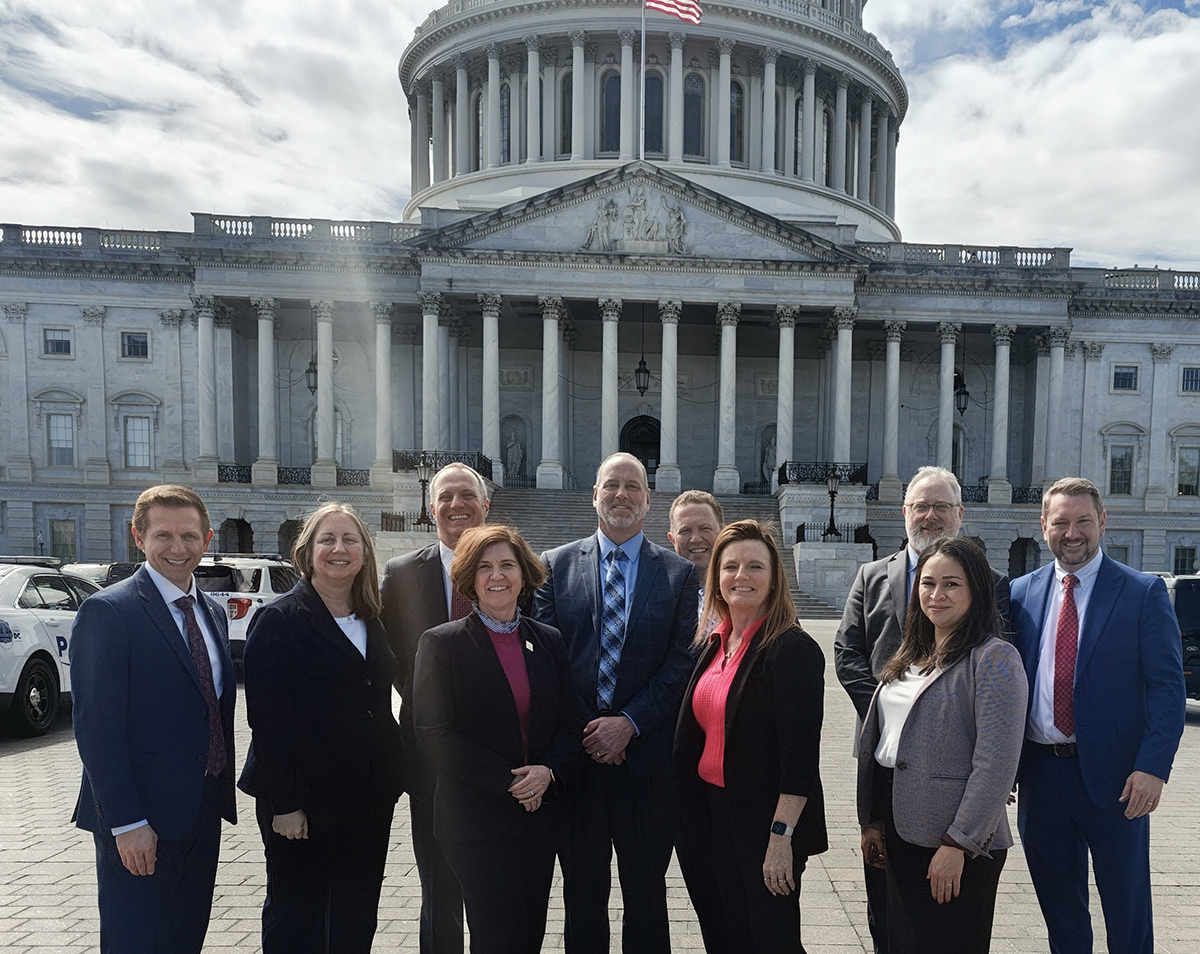 WHA and hospital leaders outside the Washington, DC capitol
The group of hospital leaders continued to stress the importance of federal approval for Wisconsin Medicaid changes enacted in the state budget, designed to approximately halve the Medicaid losses hospitals are experiencing. They also urged members of Congress to pass the Improving Seniors Timely Access to Care Act, legislation designed to streamline the prior authorization process in Medicare Advantage. While the legislation had initially passed the House in 2022, it failed to pass the U.S. Senate due to concerns about the impact to the federal budget. The legislation was then revised to remove a budgetary impact but was unable to pass last session. Sen. Baldwin and Reps. Grothman, Moore, Pocan, Steil and Van Orden have signed on as co-sponsors and all remained optimistic that the legislation will pass this session.
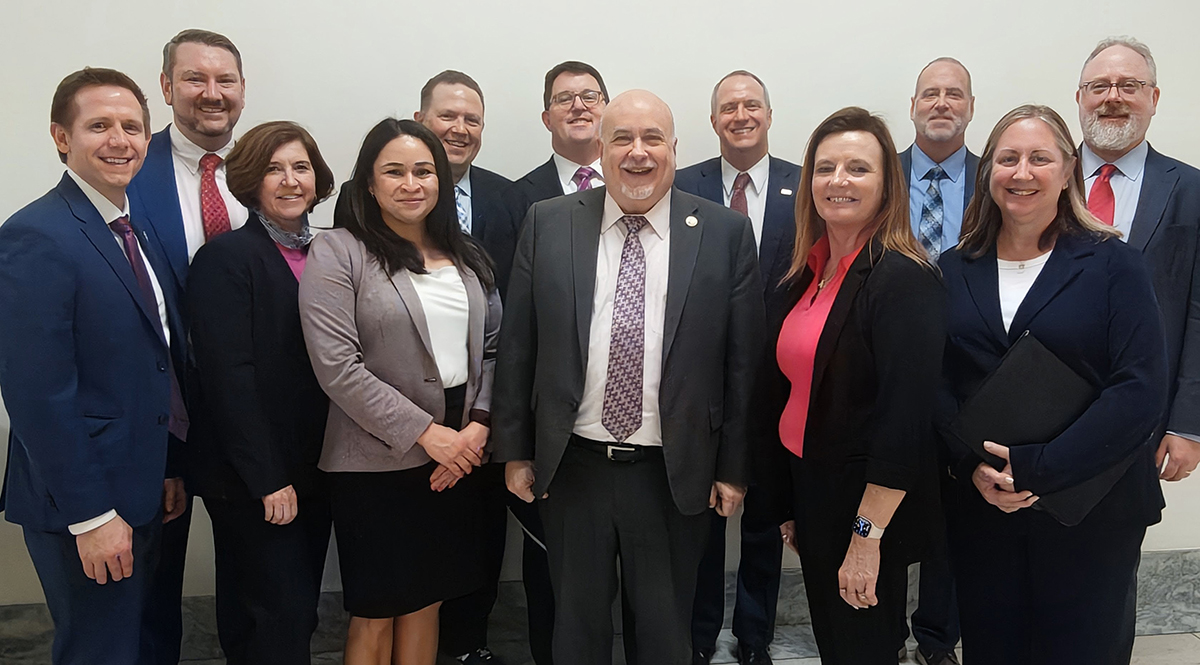 WHA and hospital leaders with Rep. Mark Pocan
WHA's group of hospital leaders also urged members to sign on to H.R. 7961, legislation that would exempt health care from the new fees of $100,000 for H1-B Visas imposed by the Trump administration last fall. As WHA stated in an October 2025 letter to the Trump Administration, while leaders understand concerns that exist surrounding certain sectors’ potential abuse of the original intent of H1-B visas, they argued that the health care industry is using the program as intended, to augment rather than replace U.S. workers with foreign workers. WHA provided examples of the "Grow our Own" program and "So Many Options" initiative, both spearheaded by WHA.
The "Grow our Own" program is a public/private partnership that leverages state and federal funding to create 86 new residency slots annually to train Wisconsin physicians, and that number is projected to continue growing. Data shows that nearly 9 out of 10 Wisconsin residents that attend a Wisconsin medical school and residency will stay and practice in Wisconsin.
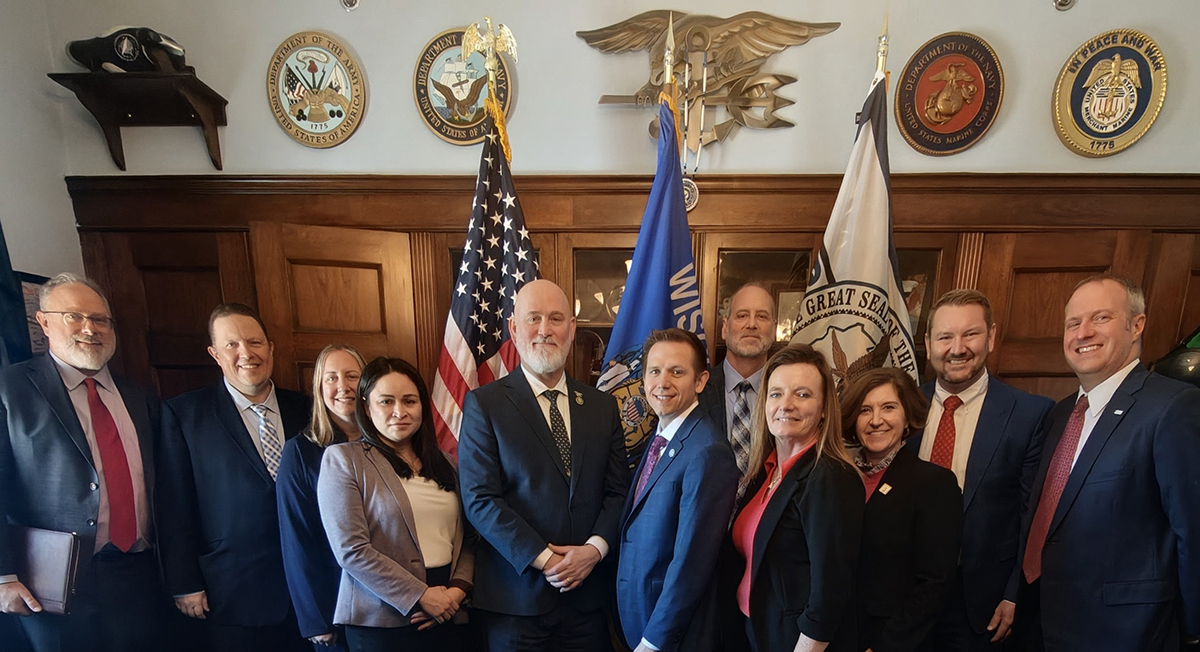 WHA and hospital leaders with Rep. Derrick Van Orden
The "So Many Options" initiative stresses the tremendous opportunities that exist for students in the health care sector to find meaningful, rewarding and good paying jobs that turn into a fulfilling career. WHA and its members have for years leveraged relationships with K-12 schools, technical colleges and university programs to foster interest in health care careers from a very young age.
Unfortunately, aging demographics suggest that despite these robust initiatives, the demand for care will continue to outpace the number of working age adults available to provide care. This makes the H1-B visa program a critical component to ensuring facilities can maintain adequate staffing 24 hours a day, 7 days a week, 365 days a year as required by patient demand and federal regulations.
WHA and Members on Capitol Hill Urging Congress to Protect Medicaid, Reform Prior Authorization and Exempt Health Care from $100,000 H1-B Visa Fees
The Wisconsin Hospital Association (WHA) and leaders from hospitals and health systems from across the state traveled to Washington, D.C. to meet with Wisconsin’s congressional delegation on April 21.
Those in attendance included John Russell and Melissa Managan of Prairie Ridge Health, Jerry Halverson, MD of Rogers Behavioral Health, Carina Marquez-Oberhoffner and Theresa Brandt of Emplify Health, Brad Wolters and Ryan Natzke of Sanford Health, Meagan Thompson of Aurora Health Care, Maureen McNally of Froedtert ThedaCare Health, Jeremy Levin of the Rural Wisconsin Health Cooperative and Kyle O'Brien and Jon Hoelter of WHA.
WHA and hospital leaders outside the Washington, DC capitol
The group of hospital leaders continued to stress the importance of federal approval for Wisconsin Medicaid changes enacted in the state budget, designed to approximately halve the Medicaid losses hospitals are experiencing. They also urged members of Congress to pass the Improving Seniors Timely Access to Care Act, legislation designed to streamline the prior authorization process in Medicare Advantage. While the legislation had initially passed the House in 2022, it failed to pass the U.S. Senate due to concerns about the impact to the federal budget. The legislation was then revised to remove a budgetary impact but was unable to pass last session. Sen. Baldwin and Reps. Grothman, Moore, Pocan, Steil and Van Orden have signed on as co-sponsors and all remained optimistic that the legislation will pass this session.
WHA and hospital leaders with Rep. Mark Pocan
WHA's group of hospital leaders also urged members to sign on to H.R. 7961, legislation that would exempt health care from the new fees of $100,000 for H1-B Visas imposed by the Trump administration last fall. As WHA stated in an October 2025 letter to the Trump Administration, while leaders understand concerns that exist surrounding certain sectors’ potential abuse of the original intent of H1-B visas, they argued that the health care industry is using the program as intended, to augment rather than replace U.S. workers with foreign workers. WHA provided examples of the "Grow our Own" program and "So Many Options" initiative, both spearheaded by WHA.
The "Grow our Own" program is a public/private partnership that leverages state and federal funding to create 86 new residency slots annually to train Wisconsin physicians, and that number is projected to continue growing. Data shows that nearly 9 out of 10 Wisconsin residents that attend a Wisconsin medical school and residency will stay and practice in Wisconsin.
WHA and hospital leaders with Rep. Derrick Van Orden
The "So Many Options" initiative stresses the tremendous opportunities that exist for students in the health care sector to find meaningful, rewarding and good paying jobs that turn into a fulfilling career. WHA and its members have for years leveraged relationships with K-12 schools, technical colleges and university programs to foster interest in health care careers from a very young age.
Unfortunately, aging demographics suggest that despite these robust initiatives, the demand for care will continue to outpace the number of working age adults available to provide care. This makes the H1-B visa program a critical component to ensuring facilities can maintain adequate staffing 24 hours a day, 7 days a week, 365 days a year as required by patient demand and federal regulations.
IN THIS ISSUE
- Sen. Brad Pfaff Highlights Rural Health Care, Workforce and Medicaid at WHA Public Policy Council
- WHA and Members on Capitol Hill Urging Congress to Protect Medicaid, Reform Prior Authorization and Exempt Health Care from $100,000 H1-B Visa Fees
- WHA Urges CMS to Scrap Plans for Potential 340B Rebate Pilot Program
- Don’t Miss This Dynamic and Engaging Closing Presenter at the Wisconsin Rural Health Conference
- Part 2 of the 2026 WHA Health Care Workforce Webinar Series Scheduled for May 12 – Relieve Workforce Burden
- WHA Education Programs
EDUCATION EVENTS
Oct. 15, 2026
Substance Use Disorders Management Boot CampOct. 15, 2026
Culture College – Breakthrough Strategies for Creating and Sustaining a Magnetic CultureOct. 20, 2026
WIpop Virtual Training: Session 1