
Click here to view past issues
IN THIS ISSUE
- Hospital and Health System CEOs Examine Costs, Access and the Future of Wisconsin Health Care
- AHA Urges Elevance Health to Rescind Anthem’s ‘Nonparticipating Provider’ Policy
- WHA Board of Directors Meets to Close Out 2025, Discusses Ongoing State and Federal Policy Priorities
- WHA in Washington, DC
- Secure your spot for the 2026 Physician Leadership Development Conference
- Caring for Wisconsin’s Caregivers Well-Being First Champion Challenge for Credentialing Kickoff
- Wisconsin Hospitals State PAC & Conduit — One Day Left to Contribute
EDUCATION EVENTS
Oct. 15, 2026
Substance Use Disorders Management Boot CampOct. 15, 2026
Culture College – Breakthrough Strategies for Creating and Sustaining a Magnetic CultureOct. 20, 2026
WIpop Virtual Training: Session 1Click here to view education event calendar
View more issues of The Valued Voice
Sign Up for WHA's Newsletter


WHA Board of Directors Meets to Close Out 2025, Discusses Ongoing State and Federal Policy Priorities
The WHA Board of Directors met Dec. 11 at WHA Headquarters in Fitchburg for its final meeting of 2025, focusing on year-end organizational progress and fast-moving state and federal policy developments.
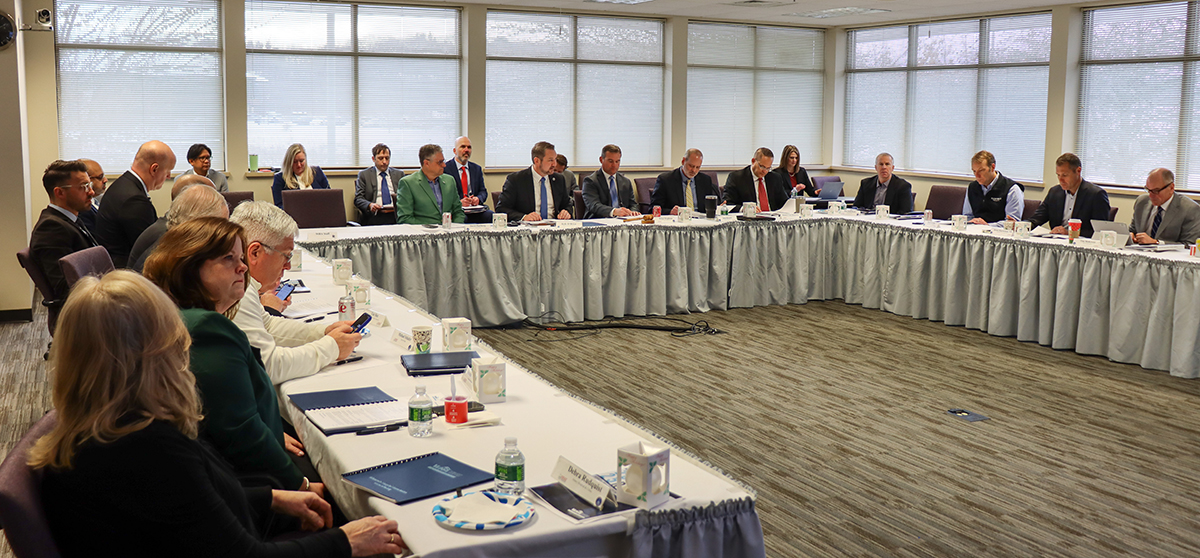 WHA’s Dec. 11 Board of Directors meeting.
State and Federal Advocacy: AHA Update on Year-End Priorities and WHA Trip to DC
The Board received a virtual federal policy briefing from American Hospital Association (AHA) Executive Vice President for Government Relations and Public Policy Stacey Hughes and AHA General Counsel Chad Golder.
Hughes provided an update on congressional efforts to address the Dec. 31 expiration of Affordable Care Act enhanced premium tax credits, noting that lawmakers were still considering multiple proposals late in the year. She warned that delays create a risk for coverage loss, explaining that once individuals experience premium “sticker shock” and opt out of coverage, “it’s really hard to put the genie back in the bottle.” If Congress acts after open enrollment decisions are made, Hughes said health plans and the administration may attempt to mitigate impacts through rebates or extended special enrollment periods, though some loss of coverage is likely.
Golder provided an update on AHA’s work to counter drug companies’ efforts to change the 340B program from one that provides up-front discounts to one that relies on back-end rebates that are concerning for 340B hospitals.
Jon Hoelter, WHA’s VP Federal Affairs and Advocacy, provided an update of WHA’s recent trip to Washington, DC to advocate for important extensions of health care policies such as the health care extenders package in the upcoming continuing resolution to fund the government, and a fix for the subsidy cliff that will trigger if the enhanced premium tax credits expire at the end of the year. The group also reminded lawmakers of the importance of federal approval for Wisconsin’s Medicaid changes enacted in the state budget.
The WHA government relations team also provided an update on ongoing state advocacy efforts that will be continuing through the 2026 legislative session.
President’s Report: Governance, 2025 Outcomes
WHA President & CEO Kyle O’Brien provided updates on board leadership and outcomes of the organization’s 2025 goals.
O’Brien reviewed officer transitions driven by recent board changes. The Board approved the nomination of Dr. Imran Andrabi to serve as Chair-elect for the remainder of 2025 and Bob Van Meeteren to serve in a one-year term as Immediate Past Chair in 2026.
O’Brien highlighted WHA’s 2025 Goals Outcomes Report, noting the document reflects an extensive staff-driven record of work completed throughout the year while also acknowledging the unpredictable nature of advocacy. He cited rural health transformation funding as a major initiative that became a significant focus in 2025 but was not anticipated when goals were originally set.
Key areas of progress included:
- Workforce initiatives, including proactive work on accreditation, credentialing and scope-of-practice issues, as well as engagement with the Department of Safety and Professional Services and the Board of Nursing.
- Medicaid and Medicare advocacy, with WHA simultaneously addressing hospital assessment issues and reimbursement-related priorities.
- Expanded federal advocacy, reflecting the growing influence of federal policy on hospital stability and access to care.
- Quality initiatives, with 90% of Wisconsin hospitals participating in WHA-led quality activities, exceeding expectations.
- Insurer accountability and prior authorization, including launch of a new workgroup focused on adverse insurer practices.
O’Brien also noted continued work heading into 2026, including development of a Wisconsin Mental Health and Addiction Care Report, emphasizing the importance of ensuring legislative efforts are well-timed and actionable.
O’Brien provided an update on the Wisconsin Hospitals State PAC & Conduit fundraising efforts, noting fundraising challenges due to donor turnover and retirements in 2025. The annual campaign is currently at 94% of its $350,000 goal for 2025. Board members expressed appreciation for the sustained effort.
He also highlighted the growing impact of WHA’s communications and digital strategy, noting advocacy campaigns such as the Healthy Wisconsin Alliance’s “Stuck in the Middle” campaign have elevated WHA’s reputation nationally. WHA staff have been invited to share campaign strategy and execution with peers in other states, reinforcing Wisconsin’s leadership among state hospital associations.
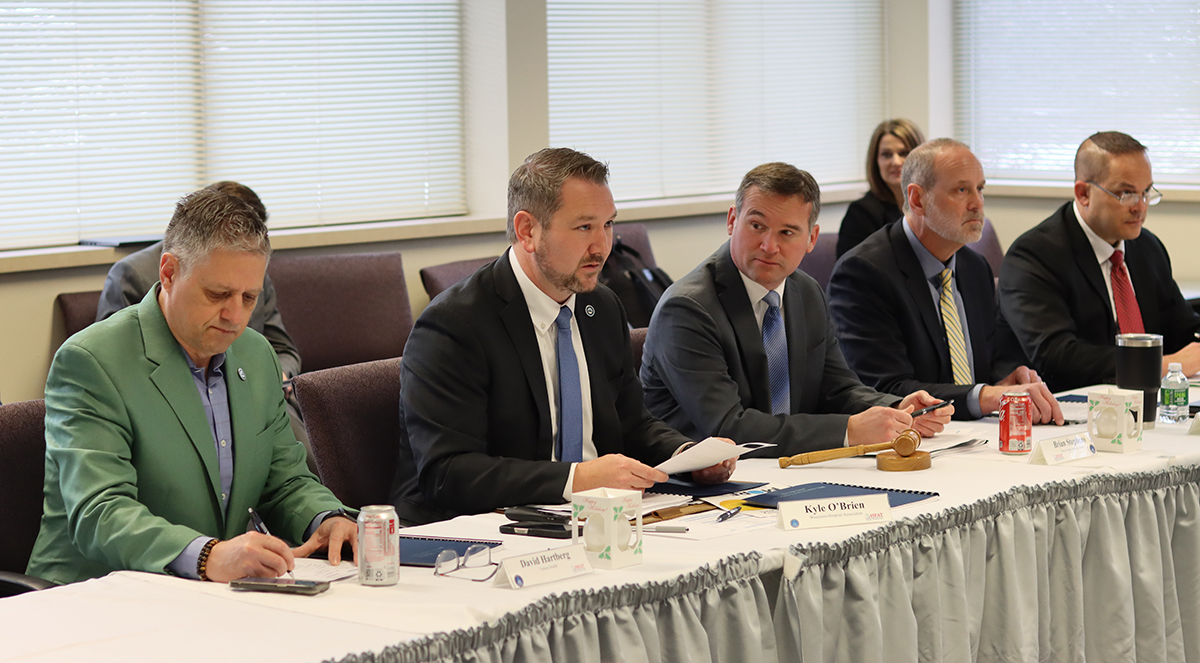 WHA Board of Directors current and past officers. L to R: David Hartberg, immediate past chair; Kyle O’Brien, WHA President and CEO; Brian Stephens, 2025 Board chair; John Russell, CEO, Prairie Ridge Health; Bob Van Meeteren, CEO, Reedsburg Area Medical Center.
Education Update: Preview of 2026 Programs
Leigh Ann Larson, Vice President of Education and Director of the WHA Foundation, provided the Board with a preview of WHA’s upcoming educational offerings in early 2026, highlighting the Health Care Leadership Academy (January–June 2026), Advocacy Day (February 25, 2026) and the Physician Leadership Development Conference (March 13–14).
Larson described how each program has evolved over time in format, content and cost, with changes driven largely by hospital member feedback. Adjustments such as hybrid delivery models, shorter in-person sessions and targeted content have helped reduce time away from hospitals while maintaining program quality and relevance.
Larson also highlighted how the promotion of WHA education programs has transformed in recent years. In partnership with the WHA Communications team, expanded use of social media, the redesigned website, member toolkits and print materials has significantly broadened reach and strengthened communication of each program’s value.
She concluded by sharing examples of participant testimonials, noting that WHA evaluates the success of education not only by attendance, but by how participants apply what they learn. Following every WHA educational event, participants are asked how they will use new information to improve operations, efficiency, employee engagement or patient experience at their hospital or health system. Responses such as “I am going to start sharing the story of the ‘why’ when asking for change in behavior or process” reflect the real-world impact of WHA’s education programs.
WHA Information Center: 2025 Highlights and New Data Tools
Brian Competente, Vice President of the WHA Information Center (WHAIC), provided an update on 2025 activities and previewed a new data tool designed to enhance member insight.
WHAIC will release the Border State Exchange Dashboard in early 2026, helping border hospitals better understand market dynamics by showing how many Wisconsinites seek care in neighboring states. The tool will support strategic planning related to regional competition and patient retention and will be available through the Kaavio suite of dashboards in the WHAIC Portal.
WHA Board of Directors Meets to Close Out 2025, Discusses Ongoing State and Federal Policy Priorities
The WHA Board of Directors met Dec. 11 at WHA Headquarters in Fitchburg for its final meeting of 2025, focusing on year-end organizational progress and fast-moving state and federal policy developments.
WHA’s Dec. 11 Board of Directors meeting.
State and Federal Advocacy: AHA Update on Year-End Priorities and WHA Trip to DC
The Board received a virtual federal policy briefing from American Hospital Association (AHA) Executive Vice President for Government Relations and Public Policy Stacey Hughes and AHA General Counsel Chad Golder.
Hughes provided an update on congressional efforts to address the Dec. 31 expiration of Affordable Care Act enhanced premium tax credits, noting that lawmakers were still considering multiple proposals late in the year. She warned that delays create a risk for coverage loss, explaining that once individuals experience premium “sticker shock” and opt out of coverage, “it’s really hard to put the genie back in the bottle.” If Congress acts after open enrollment decisions are made, Hughes said health plans and the administration may attempt to mitigate impacts through rebates or extended special enrollment periods, though some loss of coverage is likely.
Golder provided an update on AHA’s work to counter drug companies’ efforts to change the 340B program from one that provides up-front discounts to one that relies on back-end rebates that are concerning for 340B hospitals.
Jon Hoelter, WHA’s VP Federal Affairs and Advocacy, provided an update of WHA’s recent trip to Washington, DC to advocate for important extensions of health care policies such as the health care extenders package in the upcoming continuing resolution to fund the government, and a fix for the subsidy cliff that will trigger if the enhanced premium tax credits expire at the end of the year. The group also reminded lawmakers of the importance of federal approval for Wisconsin’s Medicaid changes enacted in the state budget.
The WHA government relations team also provided an update on ongoing state advocacy efforts that will be continuing through the 2026 legislative session.
President’s Report: Governance, 2025 Outcomes
WHA President & CEO Kyle O’Brien provided updates on board leadership and outcomes of the organization’s 2025 goals.
O’Brien reviewed officer transitions driven by recent board changes. The Board approved the nomination of Dr. Imran Andrabi to serve as Chair-elect for the remainder of 2025 and Bob Van Meeteren to serve in a one-year term as Immediate Past Chair in 2026.
O’Brien highlighted WHA’s 2025 Goals Outcomes Report, noting the document reflects an extensive staff-driven record of work completed throughout the year while also acknowledging the unpredictable nature of advocacy. He cited rural health transformation funding as a major initiative that became a significant focus in 2025 but was not anticipated when goals were originally set.
Key areas of progress included:
- Workforce initiatives, including proactive work on accreditation, credentialing and scope-of-practice issues, as well as engagement with the Department of Safety and Professional Services and the Board of Nursing.
- Medicaid and Medicare advocacy, with WHA simultaneously addressing hospital assessment issues and reimbursement-related priorities.
- Expanded federal advocacy, reflecting the growing influence of federal policy on hospital stability and access to care.
- Quality initiatives, with 90% of Wisconsin hospitals participating in WHA-led quality activities, exceeding expectations.
- Insurer accountability and prior authorization, including launch of a new workgroup focused on adverse insurer practices.
O’Brien also noted continued work heading into 2026, including development of a Wisconsin Mental Health and Addiction Care Report, emphasizing the importance of ensuring legislative efforts are well-timed and actionable.
O’Brien provided an update on the Wisconsin Hospitals State PAC & Conduit fundraising efforts, noting fundraising challenges due to donor turnover and retirements in 2025. The annual campaign is currently at 94% of its $350,000 goal for 2025. Board members expressed appreciation for the sustained effort.
He also highlighted the growing impact of WHA’s communications and digital strategy, noting advocacy campaigns such as the Healthy Wisconsin Alliance’s “Stuck in the Middle” campaign have elevated WHA’s reputation nationally. WHA staff have been invited to share campaign strategy and execution with peers in other states, reinforcing Wisconsin’s leadership among state hospital associations.
WHA Board of Directors current and past officers. L to R: David Hartberg, immediate past chair; Kyle O’Brien, WHA President and CEO; Brian Stephens, 2025 Board chair; John Russell, CEO, Prairie Ridge Health; Bob Van Meeteren, CEO, Reedsburg Area Medical Center.
Education Update: Preview of 2026 Programs
Leigh Ann Larson, Vice President of Education and Director of the WHA Foundation, provided the Board with a preview of WHA’s upcoming educational offerings in early 2026, highlighting the Health Care Leadership Academy (January–June 2026), Advocacy Day (February 25, 2026) and the Physician Leadership Development Conference (March 13–14).
Larson described how each program has evolved over time in format, content and cost, with changes driven largely by hospital member feedback. Adjustments such as hybrid delivery models, shorter in-person sessions and targeted content have helped reduce time away from hospitals while maintaining program quality and relevance.
Larson also highlighted how the promotion of WHA education programs has transformed in recent years. In partnership with the WHA Communications team, expanded use of social media, the redesigned website, member toolkits and print materials has significantly broadened reach and strengthened communication of each program’s value.
She concluded by sharing examples of participant testimonials, noting that WHA evaluates the success of education not only by attendance, but by how participants apply what they learn. Following every WHA educational event, participants are asked how they will use new information to improve operations, efficiency, employee engagement or patient experience at their hospital or health system. Responses such as “I am going to start sharing the story of the ‘why’ when asking for change in behavior or process” reflect the real-world impact of WHA’s education programs.
WHA Information Center: 2025 Highlights and New Data Tools
Brian Competente, Vice President of the WHA Information Center (WHAIC), provided an update on 2025 activities and previewed a new data tool designed to enhance member insight.
WHAIC will release the Border State Exchange Dashboard in early 2026, helping border hospitals better understand market dynamics by showing how many Wisconsinites seek care in neighboring states. The tool will support strategic planning related to regional competition and patient retention and will be available through the Kaavio suite of dashboards in the WHAIC Portal.
IN THIS ISSUE
- Hospital and Health System CEOs Examine Costs, Access and the Future of Wisconsin Health Care
- AHA Urges Elevance Health to Rescind Anthem’s ‘Nonparticipating Provider’ Policy
- WHA Board of Directors Meets to Close Out 2025, Discusses Ongoing State and Federal Policy Priorities
- WHA in Washington, DC
- Secure your spot for the 2026 Physician Leadership Development Conference
- Caring for Wisconsin’s Caregivers Well-Being First Champion Challenge for Credentialing Kickoff
- Wisconsin Hospitals State PAC & Conduit — One Day Left to Contribute
EDUCATION EVENTS
Oct. 15, 2026
Substance Use Disorders Management Boot CampOct. 15, 2026
Culture College – Breakthrough Strategies for Creating and Sustaining a Magnetic CultureOct. 20, 2026
WIpop Virtual Training: Session 1